





On 17 June 2026, the Management Capacity Development Program ‘The City as an Effective Owner: Corporate Governance in the Municipal Sector’ came to an end. The program was implemented with the support of EU4Reconstruction (Axis 2).
Twenty-one representatives from seven Ukrainian cities – Vinnytsia, Kremenchuk, Mykolaiv, Zhytomyr, Poltava, Khmelnytskyi and Chernivtsi – took part in the program. Participants included deputy mayors, heads and specialists from city council departments, representatives of executive committees, and departments responsible for housing and communal services, infrastructure, transport, economic development, municipal property and other areas directly related to the management of the municipal sector.
The program aims to strengthen the management capacities of local authorities in the field of corporate governance of municipal enterprises. Its key objective is to help cities better understand their role as owners, delineate the powers between the owner, the supervisory board and management, and introduce tools for strategic oversight, accountability, internal control, risk management and integrity.
The training course consisted of two modules and combined lecture sessions, moderated discussions, practical exercises, analysis of real-life case studies from Ukrainian cities, and group work. The first module, which took place on 3–4 June, focused on the role of the city as an owner, the fundamentals of corporate governance, the work of supervisory boards, the division of powers between the owner, the board and management, as well as the practical aspects of implementing corporate governance in municipal enterprises.
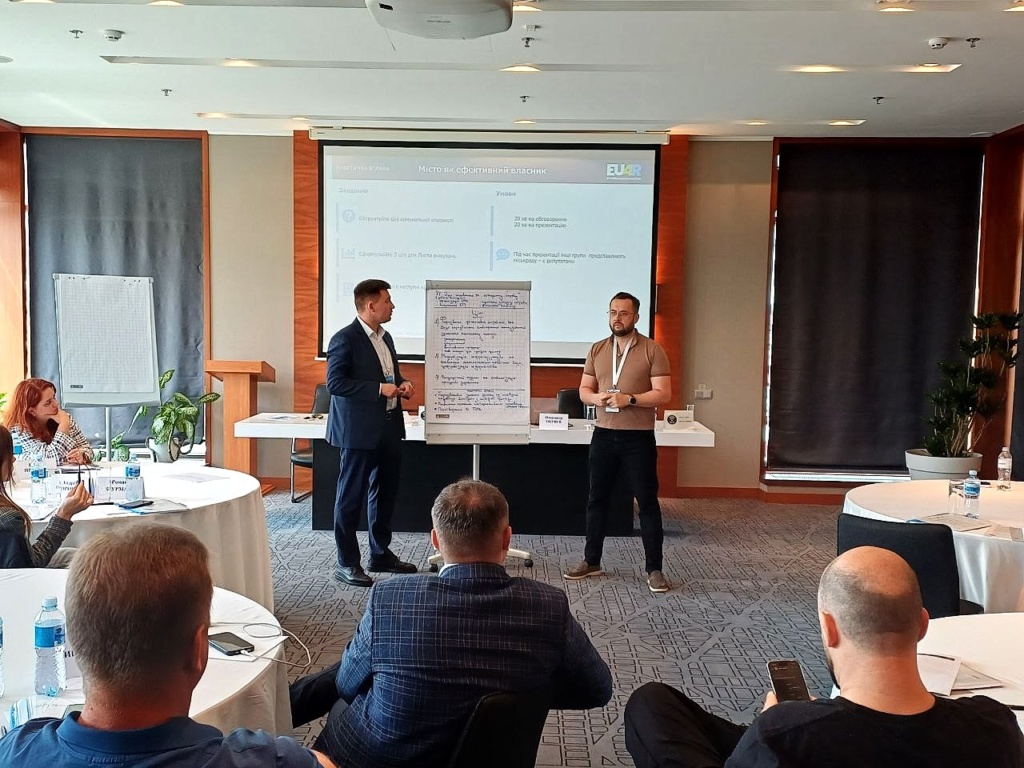
The second module, which took place on 16–17 June, focused on elements of corporate governance and the future of the utilities sector. Participants discussed strategic planning for utility companies, the alignment of utility companies’ strategies with those of local authorities, the role of the owner in setting strategic objectives, and approaches to performance management through a balanced scorecard.
A separate section of the second module was devoted to internal audit, compliance and risk management. Participants examined the role of these functions within the corporate governance framework, their interaction with the supervisory board, management and the owner, as well as basic tools such as risk registers, policies and control procedures.
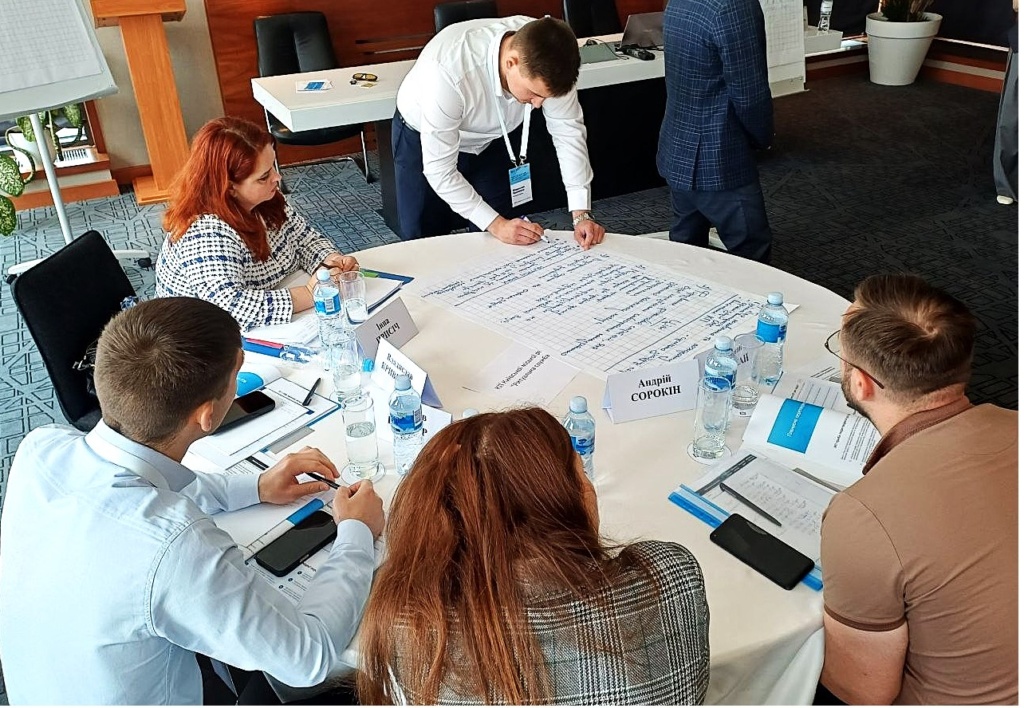
An important part of the training program consisted of open discussions with members of supervisory boards and corporate governance practitioners. Participants had the opportunity to discuss experiences of implementing corporate governance principles in complex contexts, the challenges facing large public companies, and practical lessons that could be useful for the municipal sector.
The final day of the program was devoted to the future of the municipal sector, the benefits and challenges of corporatising municipal enterprises, legislative changes, the financial sustainability of municipal enterprises, and engagement with investors and donor organisations. Participants also presented their group work on ownership policy, letters of expectations from the owner and corporate governance models; received feedback from the facilitators; and discussed possible next steps for their cities.
The speakers and moderators for the sessions in the second module were Andriy Nikitin, Vice-President of the ‘Ukrvodokanalekologiya’ Association, who spoke about strategic planning, KPIs and other tools for managing the performance of utility companies; Dmytro Serhiienko, Director of the Internal Audit Department at JSC ‘Ukrnafta’, and Yulia Azarina, Director of the Integrity and Compliance Office at NEC ‘Ukrenergo’, who addressed issues of internal audit, compliance and risk management; Anatoliy Guley, a member of the Supervisory Board of NEC ‘Ukrenergo’, and Oleksandr Yarema, a member of the Supervisory Board of JSC ‘Ukrposhta’, who shared practical experience of supervisory boards operating in complex contexts; Volodymyr Igonin, partner at Vasil Kisil & Partners, who spoke about the benefits and challenges of corporatising utility companies and facilitated discussions on ownership policy and letters of expectations from the owner; Yulia Mincheva, adviser to the Mayor of Mykolaiv, who worked with participants on practical models of corporate governance and issues relating to the interaction of municipal enterprises with investors and donors; Vyacheslav Ovechkin, Chief Representative of the European Investment Bank in Ukraine, and Yulia Rybakova, banker in the ‘European Infrastructure’ division of the EBRD’s Sustainable Infrastructure Group, who spoke about financing the operations of enterprises and the role of corporate governance in enhancing investment attractiveness; Taras Sluchyk, Acting Head of EU4Reconstruction (Axis 2), and Oleksandr Slobozhan, Executive Director of the Association of Ukrainian Cities, who took part in an open dialogue on legislative innovations for the municipal sector.
Individual discussions and the concluding debate were moderated by Oleksandr Okuniev, Chair of the Board of Directors of the CGPA.
The program concluded with a summary of the proceedings, the presentation of certificates to participants, and a discussion of the next steps for putting the knowledge gained into practice in the cities.
The program ‘The City as an Effective Owner: Corporate Governance in the Municipal Sector’ served as a practical platform for professional dialogue between representatives of local authorities, corporate governance experts, supervisory boards, international financial institutions and associations. It helped participants to take a systematic look at the role of the city as an owner, to better understand the tools for the effective management of municipal enterprises, and to develop initial practical approaches to implementing modern corporate governance standards in the municipal sector.