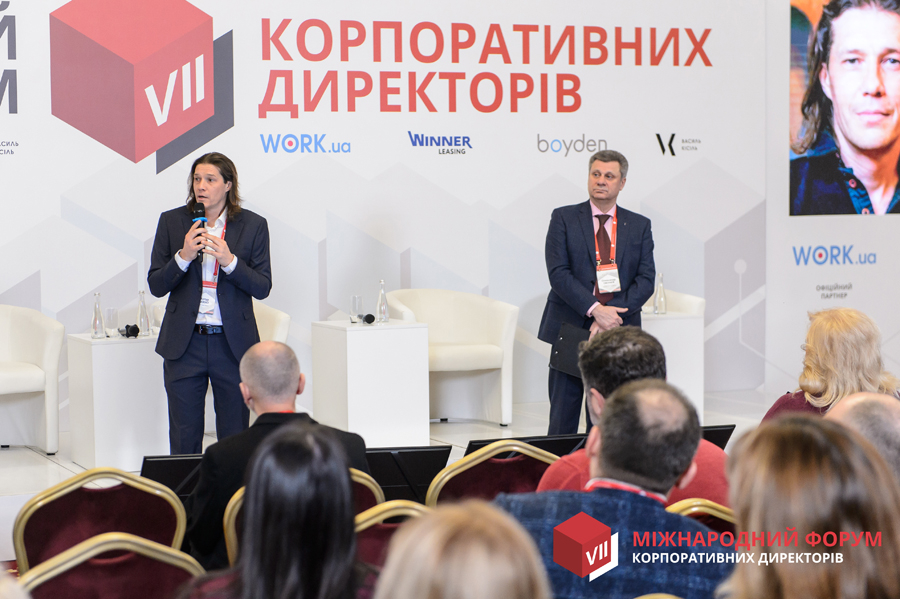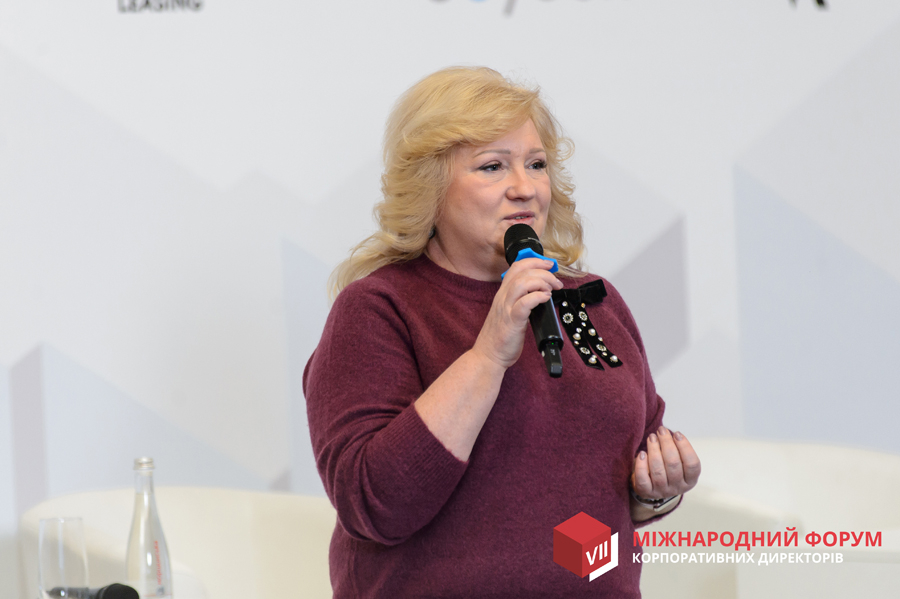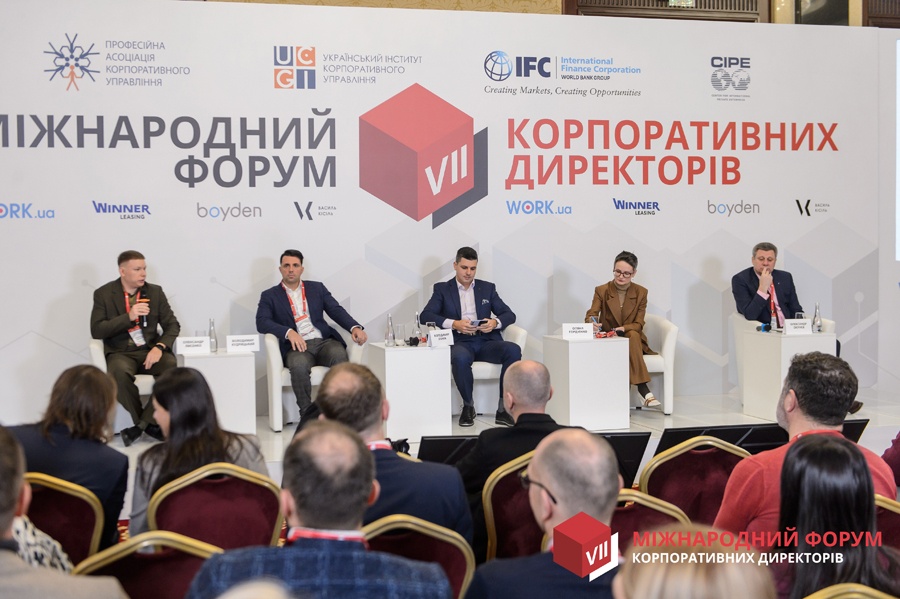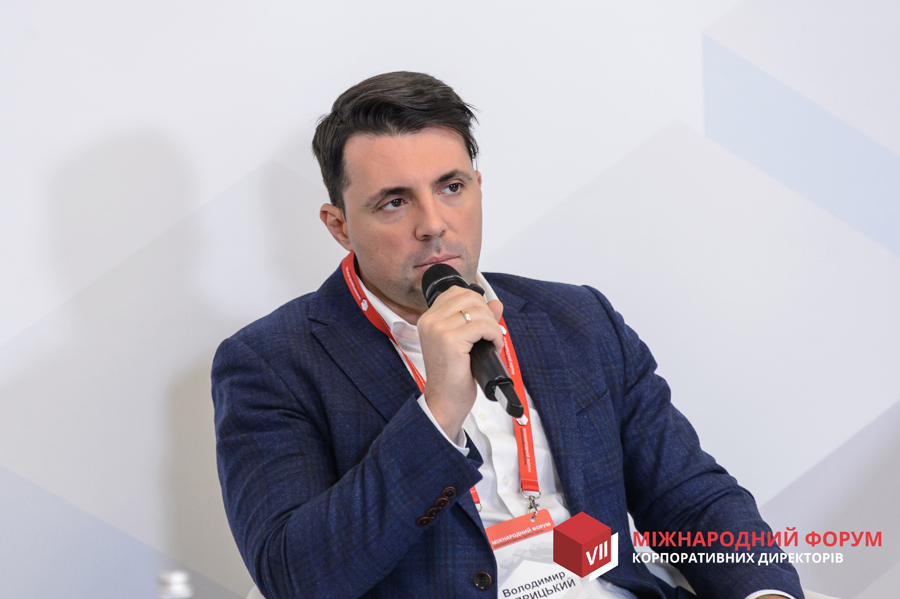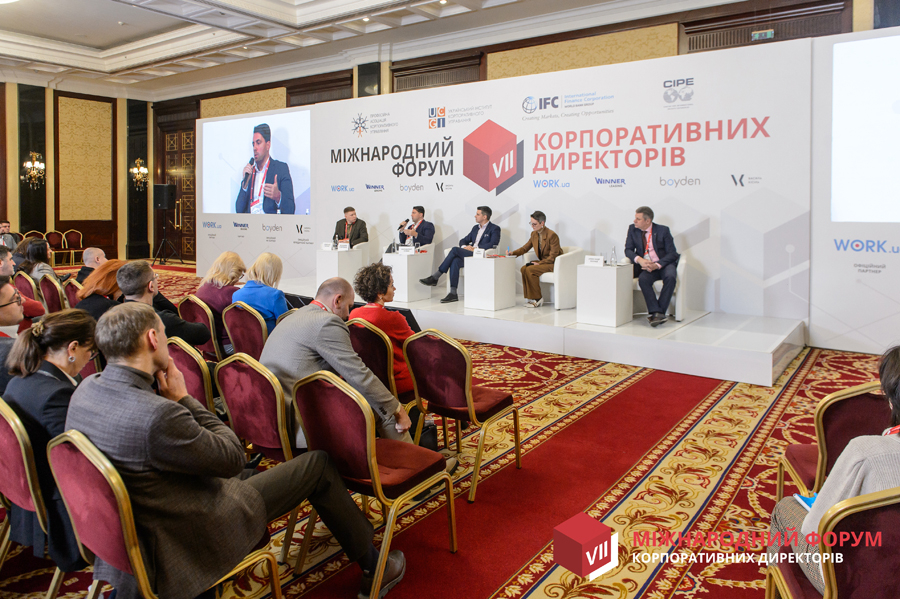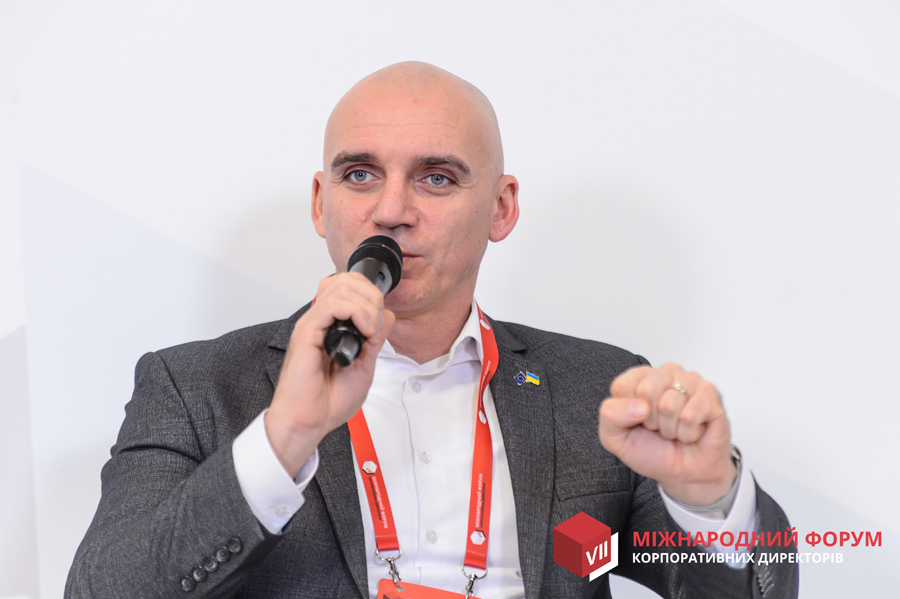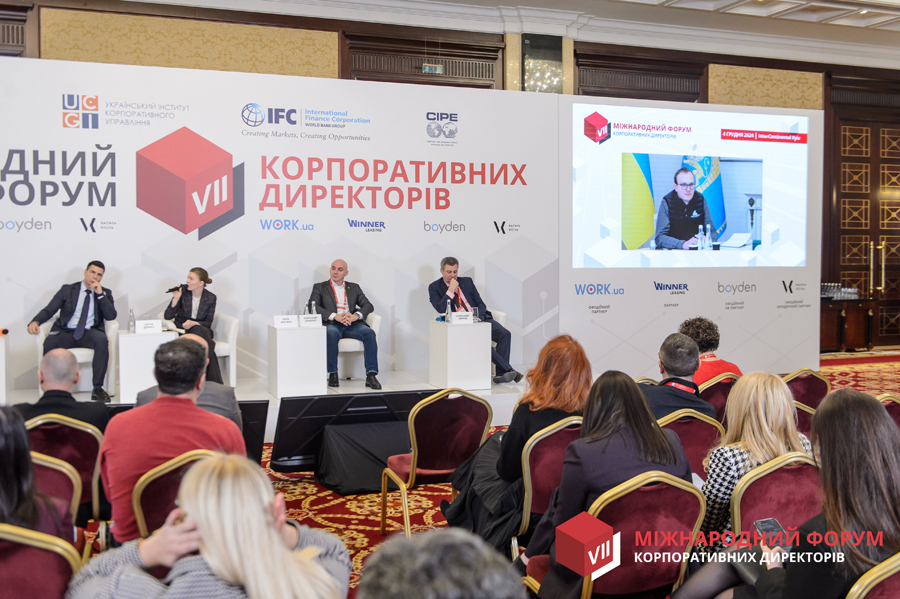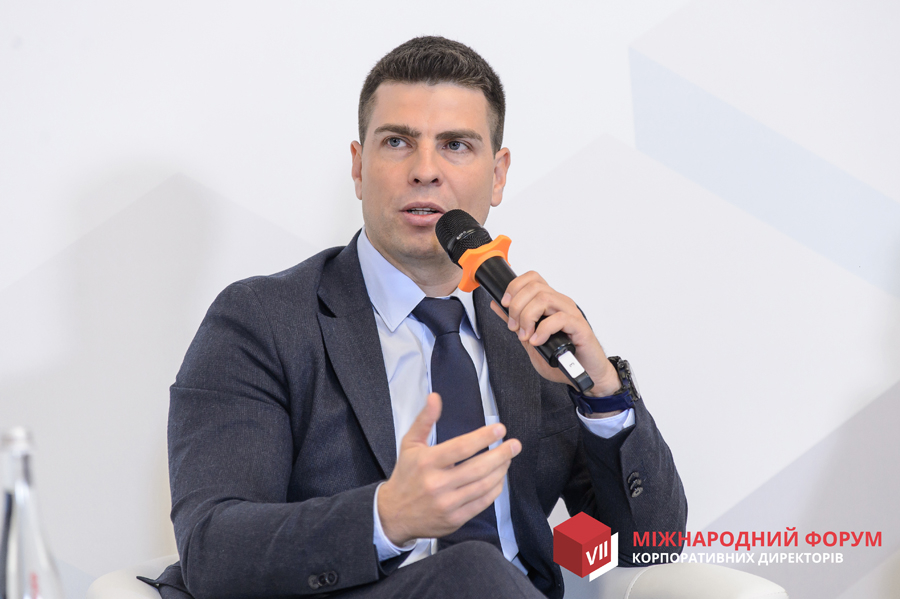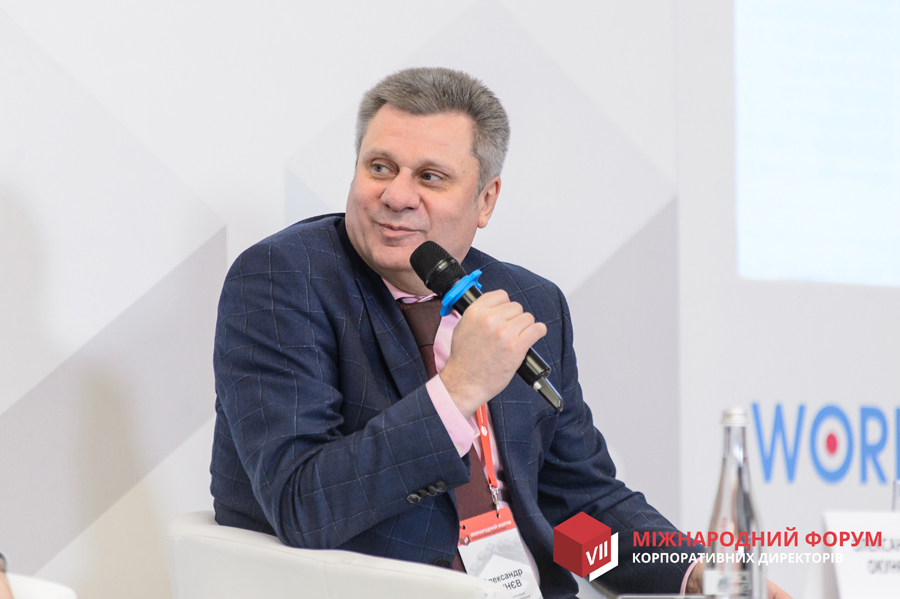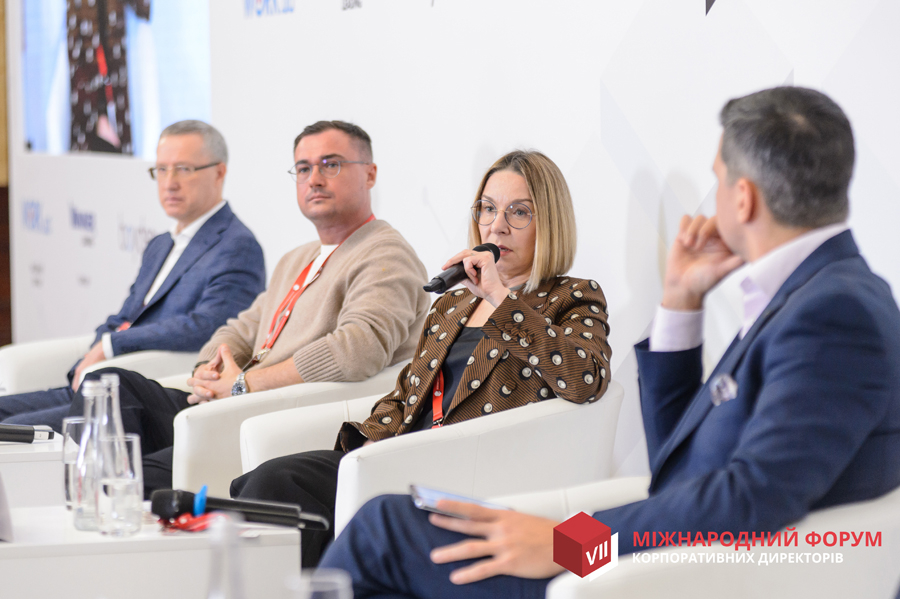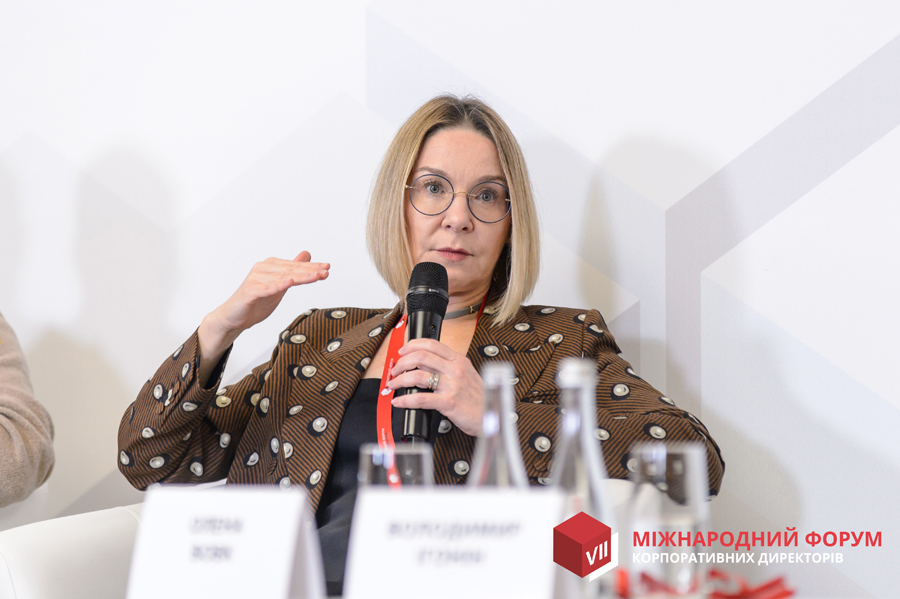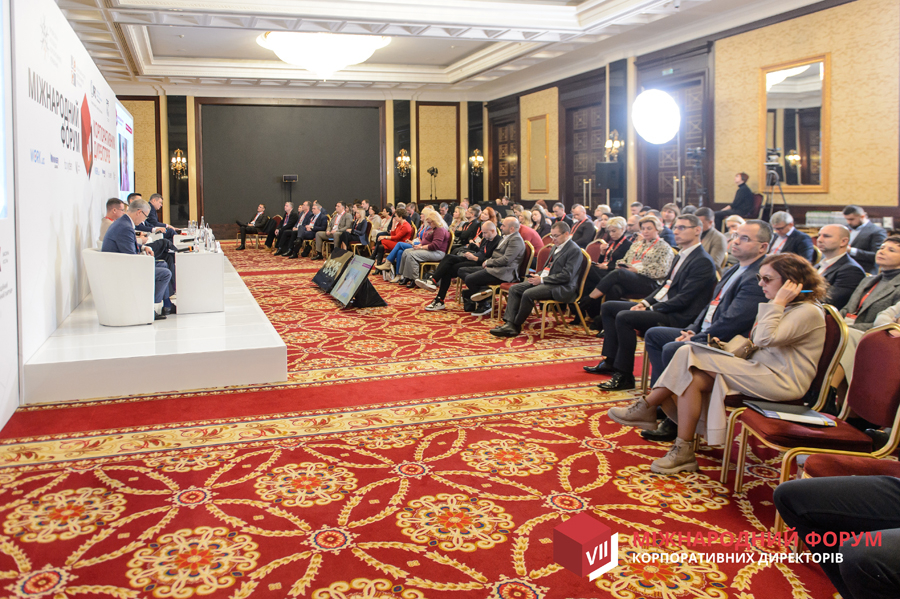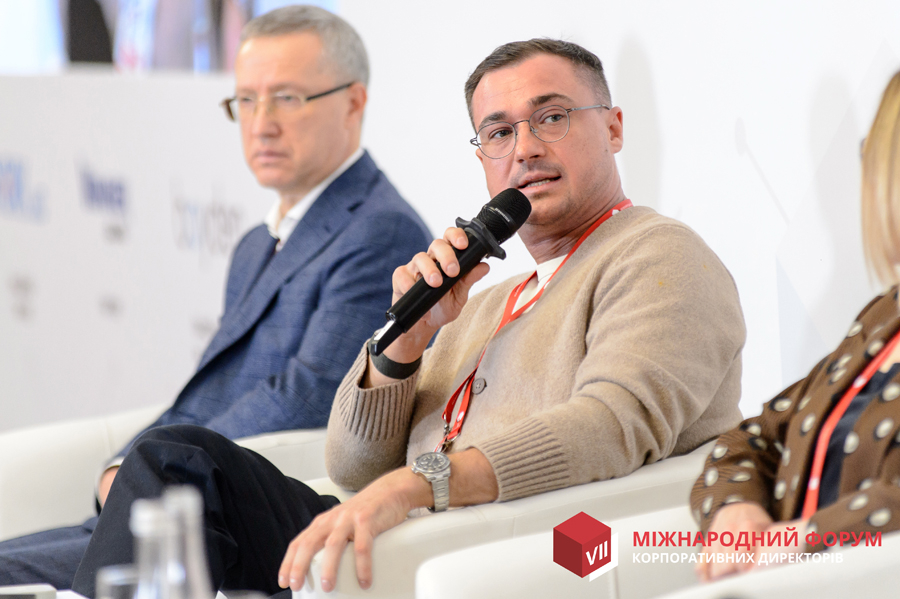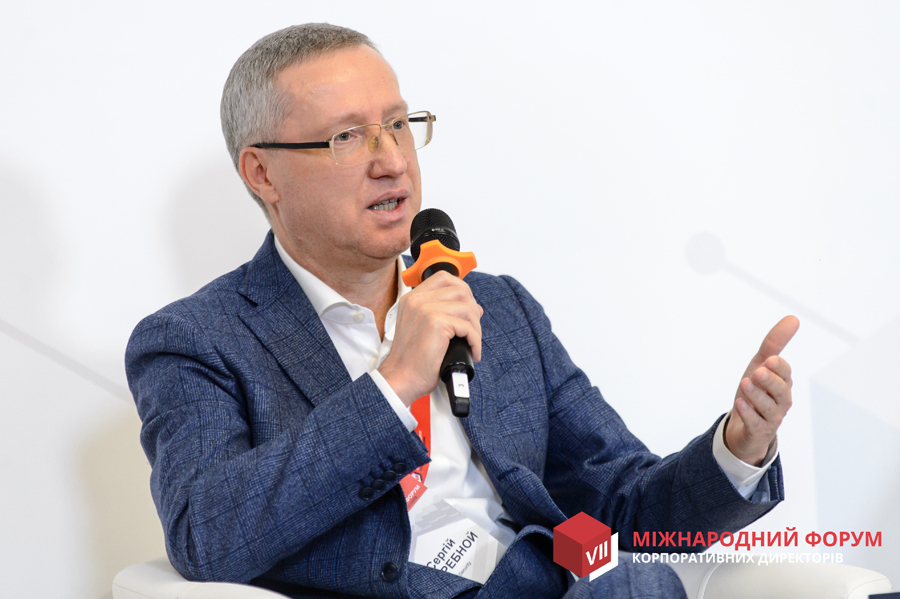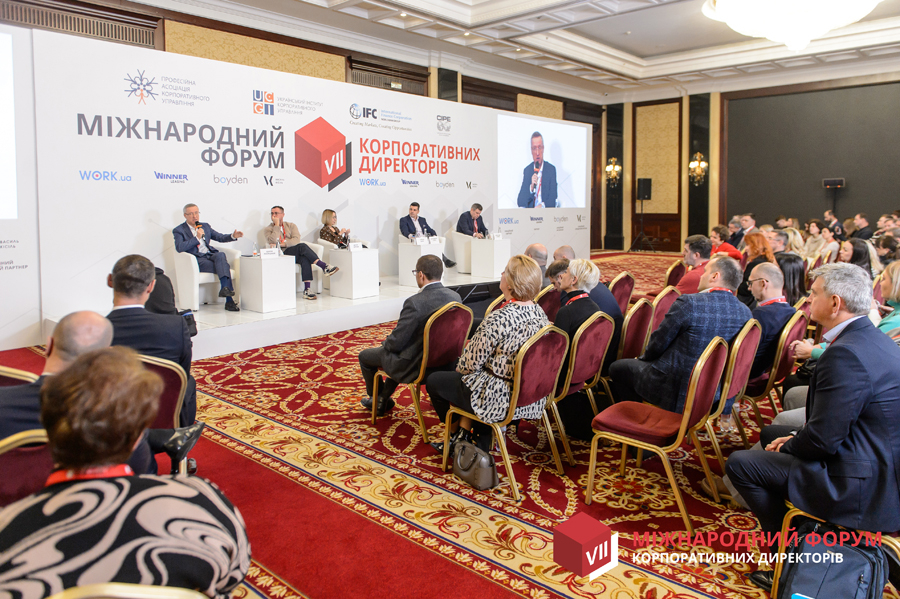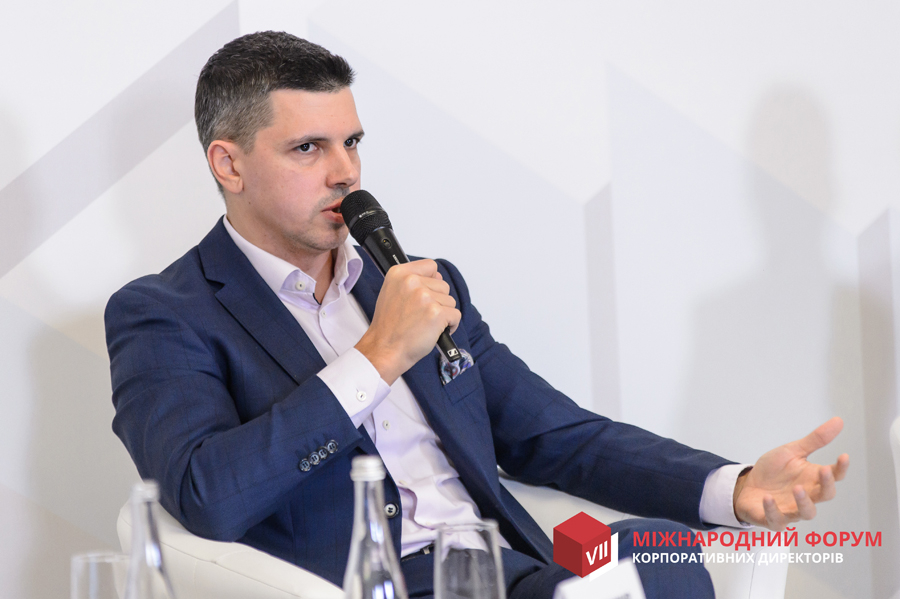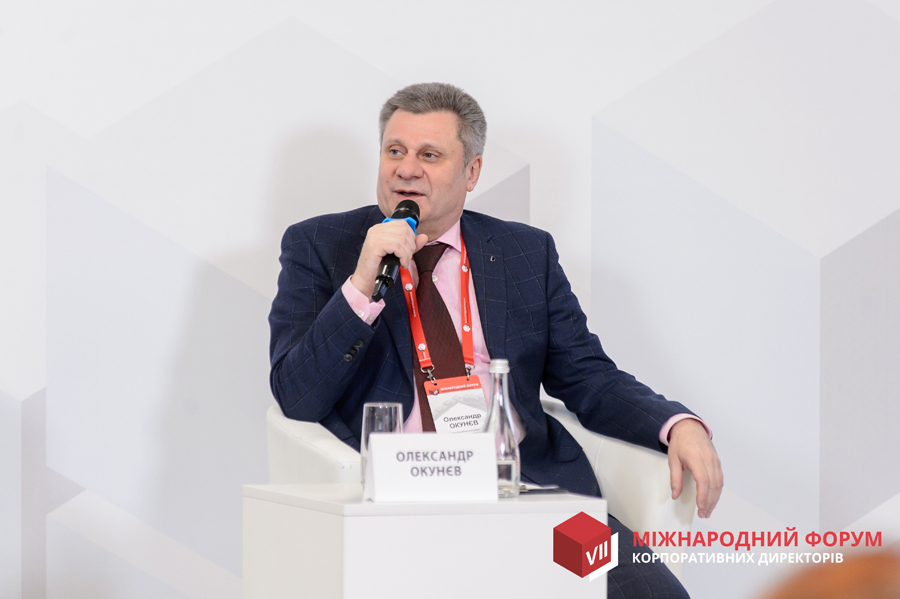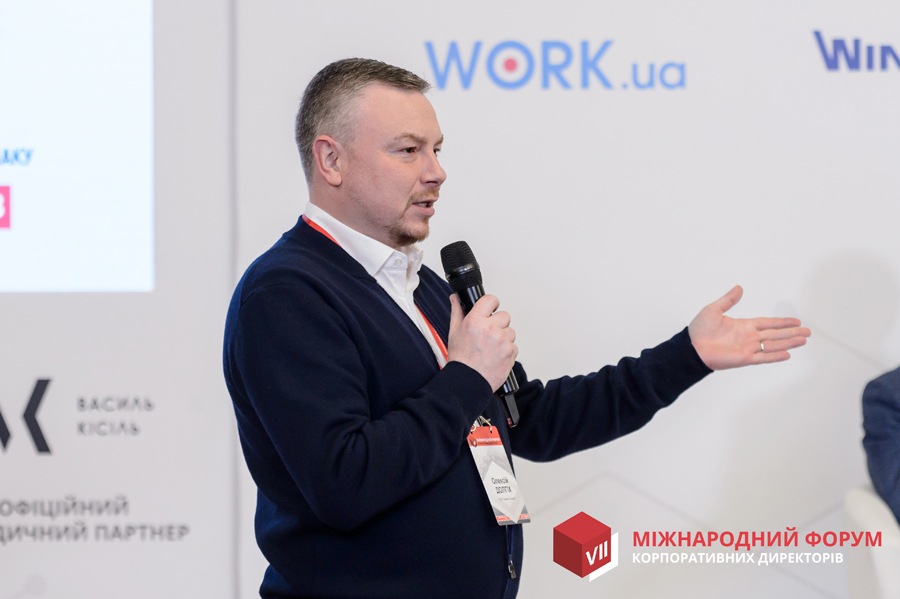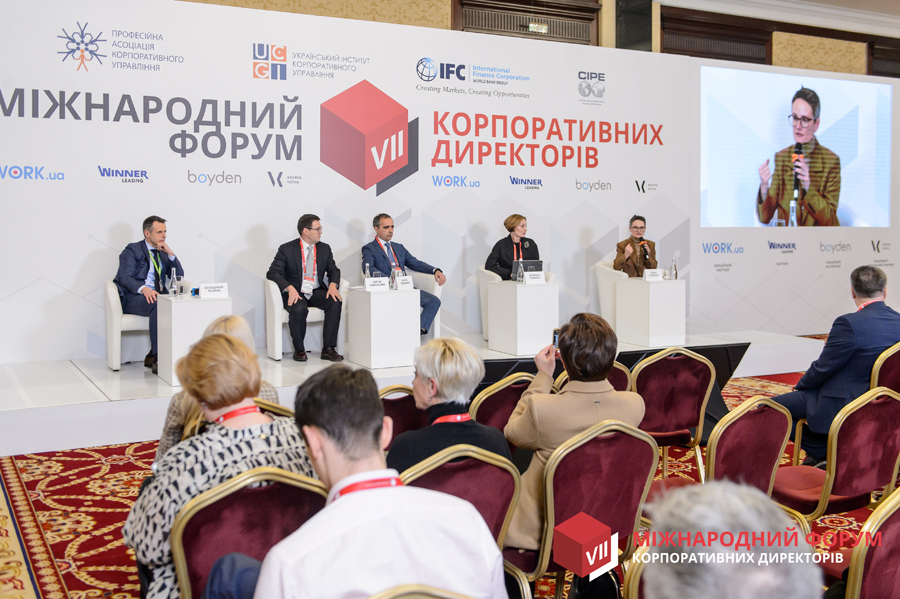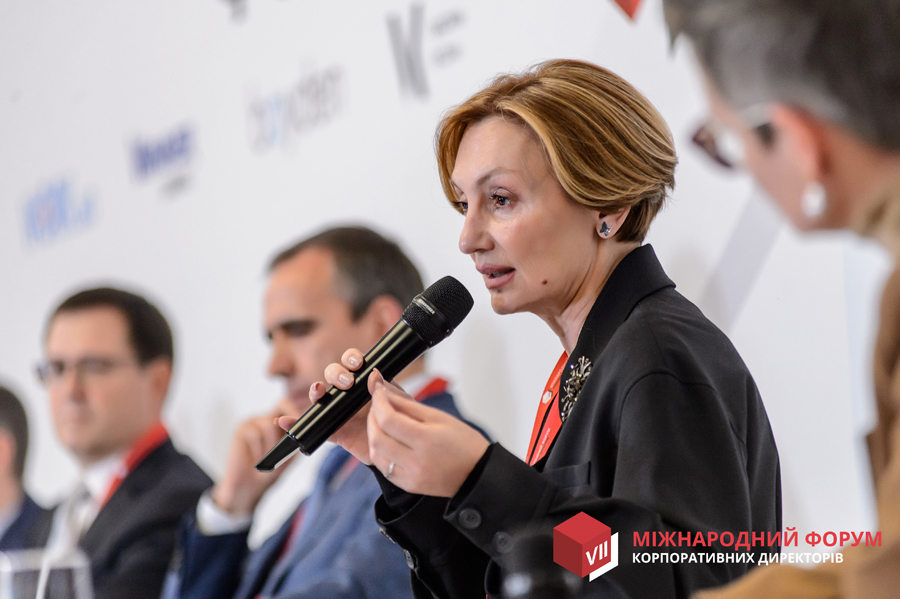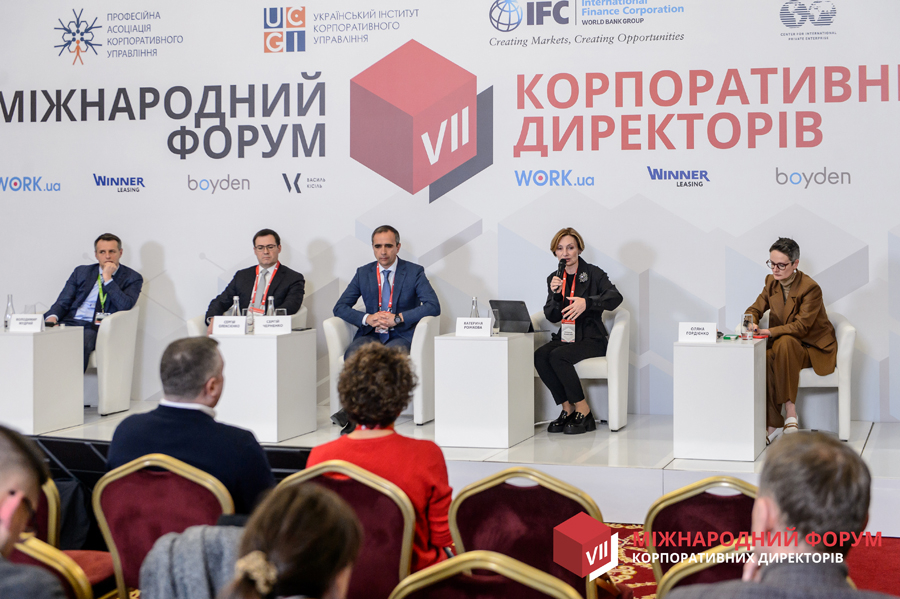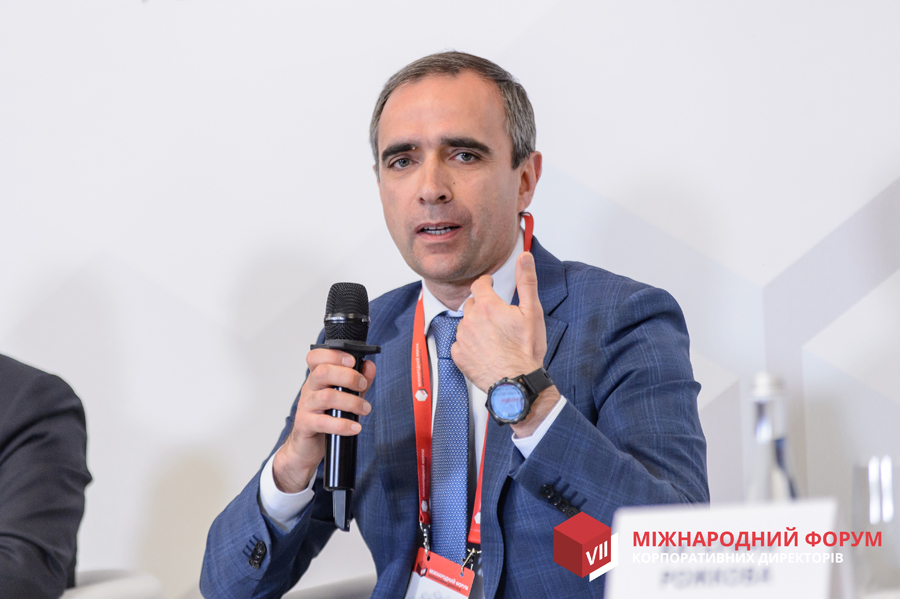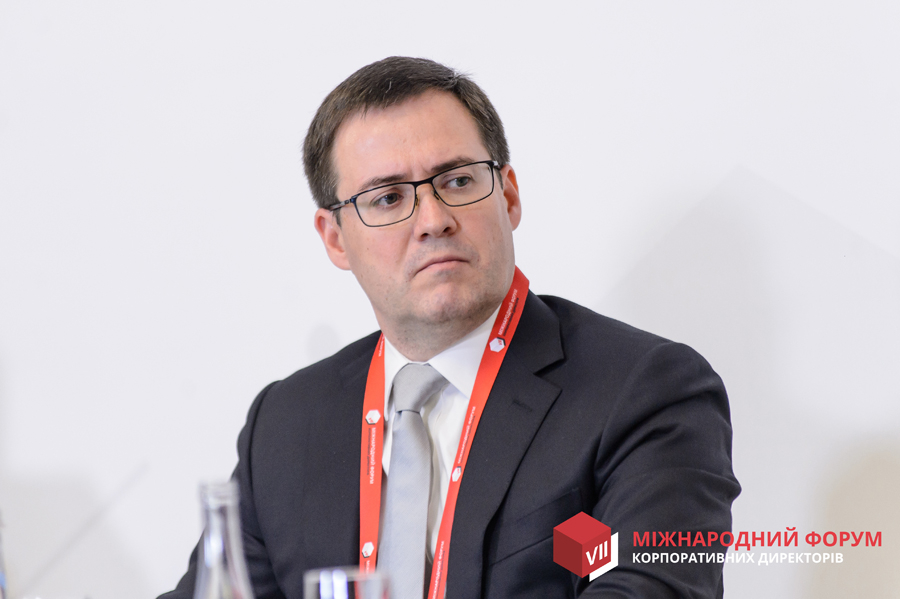
On December 4, 2024, the VII International Corporate Directors Forum was held. Oleksandr Okuniev, Chairman of the Board of Directors of the Corporate Governance Professional Association, welcomed the colleagues and thanked the co-organizers, partners, speakers and guests of the forum, who gathered once again to discuss the achievements, successes, and new prospects for the development of corporate governance and the activities of boards of directors in Ukraine.
If you were unable to attend the Forum, but want to watch all the insights from the speakers, we suggest purchasing a video recording of the event at the link
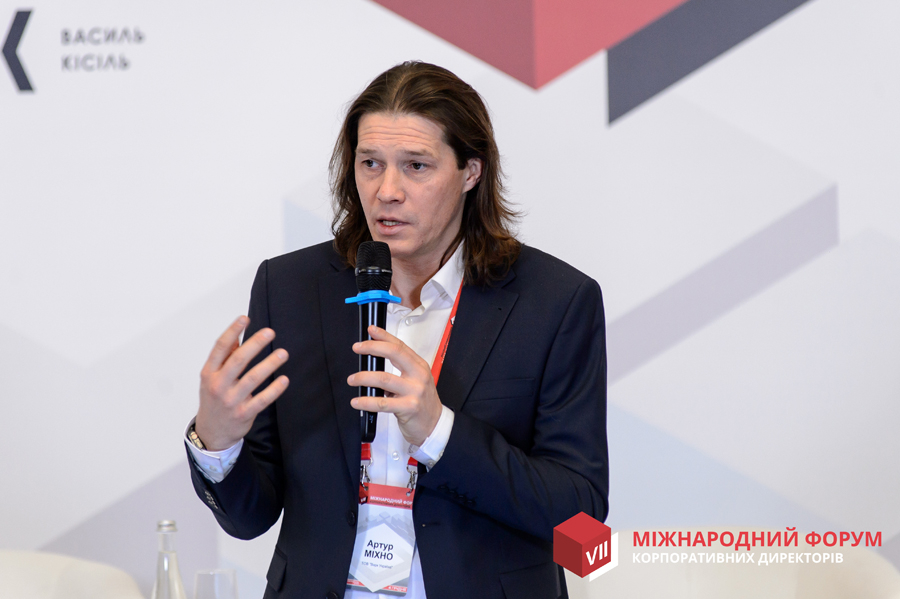
Artur Mikhno, CEO and co-founder of Work.ua, in his welcoming speech, noted that “corporate governance is a systemic basis without which Ukrainian companies will not be able to attract financing and be competitive on the international level.” Mr. Mikhno also highlighted the aspect of culture, noting that “culture is a strategic weapon of Ukraine based on our values, thinking and principles, and it is this that can inspire people and shape the country’s future, become the basis for development and attracting foreign assistance.”
Oksana OLEYNIKOVA, Director of CIPE Ukraine, noted that “CIPE has always supported the organization of the Forum, which has become a national platform for annual discussion of topical issues of corporate governance in Ukraine. We are grateful to the Ukrainian business, which, despite the difficult conditions, continues to work and support Ukraine’s struggle for the future.”
This year, the Forum was organized in the format of 4 sessions, each of which was dedicated to a separate category of companies. At the panel discussion on corporate governance in state-owned companies, the participants discussed a decade of reforms in the field of corporate governance of state-owned enterprises: what changes have been implemented over this time, what still does not work effectively, whether it was possible to minimize political influence on the management of state-owned enterprises, how the new law on corporate governance has affected public sector management practices.
Volodymyr KUDRYTSKYI, Chairman of the Board of Ukrenergo (2020-2024), noted from his own experience that political influence on the activities of supervisory boards of state-owned enterprises has not been minimized over the past 10 years but has been greatly limited. Without political will, corporate governance does not work at full capacity.
Volodymyr Igonin, CGPA Board Member, Partner at Vasil Kisil & Partners, noted that a big problem in ministries and agencies is the lack of a long-term planning horizon. The planning cycle itself is such that most policies and procedures require a long process of implementation, and the results are usually already received by another team. Special attention was paid to the adoption of the state property policy, which is aimed at improving the management of state assets and attracting investment. V. Igonin noted that the approach to state ownership policy has evolved. The ownership policy is in line with the OECD Principles, and if at least some of its principles are implemented, it will be a great achievement. All policies are reviewed over time, updated and improved to meet the challenges of time and circumstances. “Ownership is obligatory, and state ownership is even more obligatory, so the state as the owner needs to decide which companies will remain in state ownership and which will not,” concluded Mr. Igonin.
Olyana GORDIYENKO, Corporate Governance Director of ICU Group, Chairman of the Supervisory Board of JSC Ukreximbank (2019-2023), in response to the question of what is the problem of ineffective operation of supervisory boards of state-owned enterprises, noted that the biggest problem is the “unprofessionalism” of the personnel of both controllers and owners at the level of ministries and departments, as well as at the level of members of supervisory boards, as well as the lack of effective communication. Ms. Gordienko believes that it is not the direction of political will that needs to be fought for, but rather the strengthening of good public administration and the improvement of the capacity of the government and civil servants.
Oleksandr Lysenko, CGPA Board Member, co-moderator of the panel, noted that over the past 10 years, supervisory boards of state-owned enterprises have often not even been able to fulfill their main function, namely the selection and appointment of CEOs, and almost every appointment was accompanied by some problems.
Why is corporate governance important for municipal companies? The principles, standards and approaches of corporate governance are ideally suited to the municipal sector, as hundreds of thousands of Ukrainian city residents are the “shareholders” of municipal enterprises. The participants of the second discussion at the forum considered how the utility sector is transforming, what challenges and opportunities utilities face, and why corporate governance is the best answer to these challenges.
Good governance of utilities means awareness of efficiency and attention to the social component of the utility sector. The introduction of the institution of supervisory boards in municipal enterprises is about building a sustainable bridge between the management of the enterprise and the owner, represented by local government representatives. The task of such supervisory boards is to ensure more efficient use of resources and opportunities available to the company, which in the long run can stabilize the financial condition of enterprises and improve the quality of services. “Establishing supervisory boards at the largest municipal enterprises is a logical step for a city that strives to be transparent and efficient,” said Oleksandr SENKEVYCH, Mayor of Mykolaiv.
Andriy Moskalenko, Deputy Mayor of Lviv, shared the positive experience of the Supervisory Board of Lvivvodokanal, in particular in attracting additional financial instruments. As a result, the company’s management has become professionalized, eliminating the practice of so-called “manual management” by employees of the city council department. The City Council is already working on appointing supervisory board members for another municipal enterprise, and appointments for several others are planned for the near future. When selecting members of supervisory boards of its municipal enterprises, Lviv City Council is guided by the principle of engaging foreign experts from partner cities to implement the best international practices and standards of municipal property management.
Oleksiy Movchan, MP, Deputy Chairman of theVerkhovna Rada Committee on Economic Development, spoke in opposition to the progressive vision of corporatization and the establishment of supervisory boards in municipal enterprises. He emphasized that until new legislation on the municipal sector is adopted, the introduction of corporate governance and the creation of supervisory boards at municipal enterprises will not be effective and there will be little benefit from their activities. Mr. Movchan called on the progressive mayors of Mykolaiv and Lviv to support legislative changes in the management of municipal property, which lawmakers have already begun to develop.
Serhiy Derkach, Deputy Minister of Communities and Territories Development of Ukraine, noted that corporatization of municipal property and creation of supervisory boards is an important step, but this process will not be quick. First, it is necessary to start with educational work among local government officials to explain the feasibility of such changes and their effectiveness. Secondly, before introducing any innovations, a detailed risk analysis should be conducted to choose the best approach to minimize possible threats and problems based on its results.
Oleksandr OKUNIEV, Chairman of the CGPA Board of Directors, and session moderator Yulia MINCHEVA, Head of the Integrity Support Office of Mykolaiv City Council, spoke about a joint project to select independent members of the Supervisory Board of Mykolaivvodokanal.
Olena Vovk , co-owner of the biotech company Enzym Group and pet food producer Kormotech LLC, shared her experience of implementing corporate governance in her family business . Olena emphasized that it was thinking about the future – business transfer, succession and sustainable development of companies – that became a key incentive for the implementation of good corporate governance standards. In particular, this included the introduction of a shareholders’ agreement, the creation of a family board of shareholders and a board (an advisory board that should eventually be transformed into a supervisory board). To implement the new strategy, the company needs to change its organizational structure and corporate culture to facilitate its strategic development.
Kateryna ZLENKO, member of the Board of Directors of MacPaw Group, said that her company is at a new stage of development of its management structure. The need for flexibility and efficiency for internal processes and investment attraction has increased. Currently, the holding’s Board acts as a general meeting of shareholders, where everyone has an equal vote, but in case of equality, the largest shareholder has the final decision. This system worked for some time, but its shortcomings became apparent: overlapping functions between the Board and executive bodies slowed down the work. The shareholders decided to divide powers, switch to a two-tier management structure, and engage independent directors to ensure objectivity.
Denys Sychkov, Principal at Horizon Capital, shared his valuable experience in merging Ukrainian companies, raising finance and investments. He emphasized that the key success factors are dynamic business growth, implementation of modern corporate governance standards, and a high level of transparency and openness of the companies with which the Fund cooperates.
Sergiy POGREBNOY, co-founder of SK Security, noted that one of the main functions of the supervisory board is to ensure corporate security of the business. An effective management system and a clear corporate structure contribute to stability and security in the company’s operations, allowing to distribute responsibility between the owners, the supervisory board and the executive body. This is important for effective management and protection of the company’s governance structure.
Oleksandr Okuniev, Chairman of the CGPA Board of Directors, spoke about the opportunities for the development of corporate governance and board governance systems offered by the CGPA for Ukrainian companies.
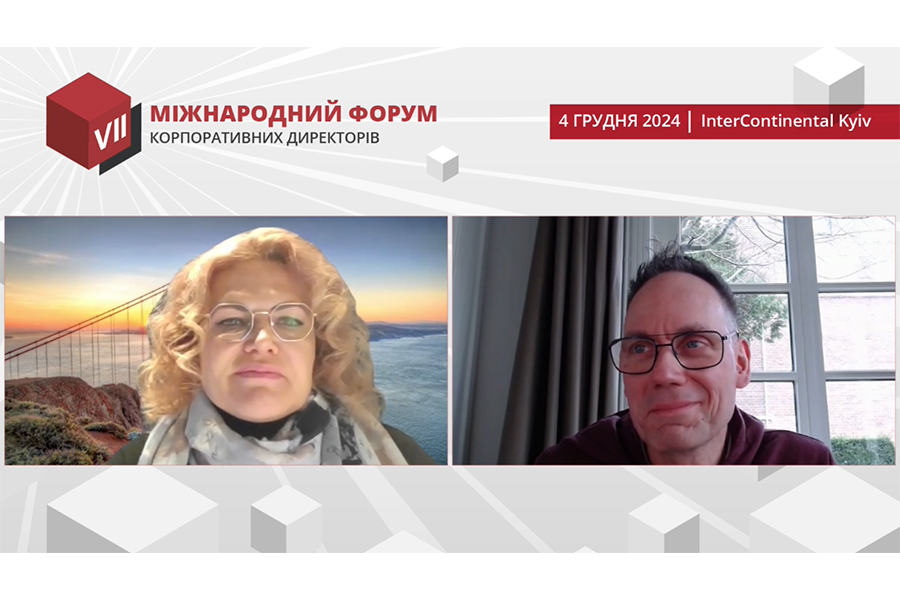
Eric Vermeulen, Professor of Law at Tilburg University, Senior Legal Advisor at Signify ( ex Philips Lighting), and Member of the Board of Directors at VIVENT (Netherlands), shared with the participants his experience and observations on digitalization and the introduction of artificial intelligence elements in company management processes. “If a company is not ready for the digital world, you are not ready for the future. We have to adjust, change, adapt, and implement digitalization at the board level. Artificial intelligence can become an indispensable assistant for boards of directors, accelerating data analysis, helping to select candidate,s and facilitating more efficient decision-making and communication. Still, it will not replace the human factor and the board itself,” said Eric Vermeulen.
The session was moderated by Nadiya VASILIEVA, co-founder, managing partner of Freedom Venture Fund, visiting professor at MIT, and independent director of supervisory boards.
This year, during the Forum, we discussed important aspects of corporate governance in the banking sector in the context of a full-scale war. The problems faced by banks require quick and flexible solutions, as well as the ability to adapt to new challenges.
Kateryna Rozhkova, First Deputy Governor of the National Bank of Ukraine, shared her experience of changes in banking supervision after the outbreak of war. She emphasized the importance of restoring operational resilience and updating business continuity plans. The full-scale invasion did not become an obstacle to the introduction of new technologies and approaches; remote management, which was successfully applied during the pandemic, proved to be very good even at the beginning of the full-scale invasion.
Serhiy OLEKSIYENKO, a member of the Supervisory Board of PrivatBank, spoke about the internal control system that allows the quick stopping of any decisions that may threaten the bank’s security. Thanks to cloud technologies, the bank can always continue uninterrupted operation and communication with customers, even in the event of physical destruction of the infrastructure.
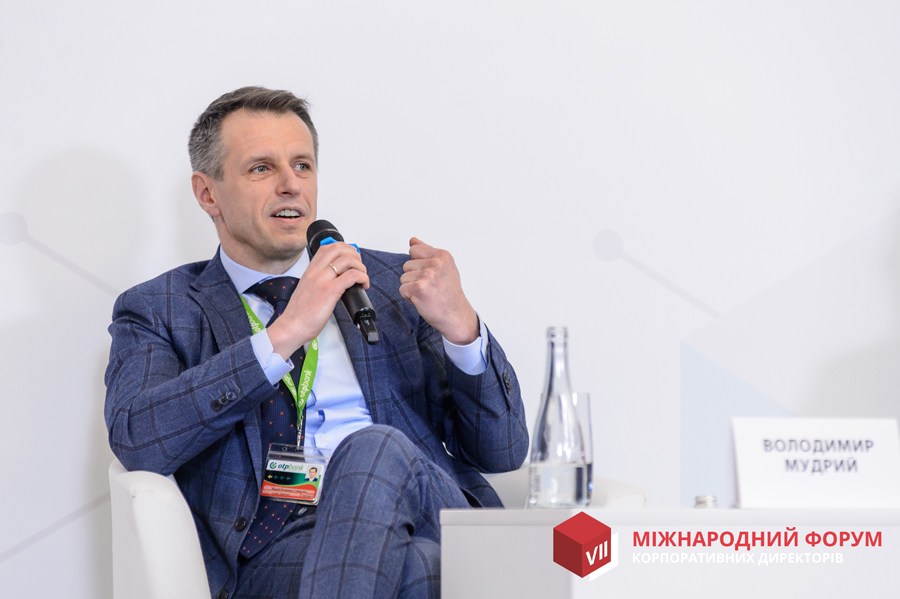
Volodymyr MUDRYI, Chairman of the Board of OTP Bank Ukraine, noted that OTP Bank’s activities must comply with three regulators – European standards, national standards (of the National Bank) and standards of the National Securities and Stock Market Commission, which is actively implementing American corporate governance standards for financial institutions in Ukraine. During the war, the priorities of the committees changed, and the role of the CEO became more dynamic, adapting to the current situation.
Serhiy Chernenko, FUIB’s Chairman of the Management Board, spoke about the fundamental changes in the bank’s management during the war. The Anti-Crisis Committee took over most of the management functions to make the necessary decisions quickly. The Supervisory Board actively interacted with the committee, which allowed to maintain efficiency and control without slowing down the decision-making process.
The panel was moderated by Olyana GORDIENKO, Corporate Governance Director of ICU Group, Chairman of the Supervisory Board of JSC Ukreximbank (2019-2023), who emphasized the importance of adapting roles in an environment of instability. Agility, the ability to quickly change approaches, has become critical for the survival and development of banks in this difficult period. These lessons and experience are important for the development of corporate governance in times of crisis, as adaptation and preparedness for unforeseen situations are becoming key to maintaining the stability of the country’s financial system.
This year’s forum emphasized the importance of corporate governance for the sustainable development of Ukraine’s economy, especially in the context of a full-scale war, and became a platform for sharing experience and best practices.
If you were unable to attend the Forum, but want to watch all the insights from the speakers, we suggest purchasing a video recording of the event at the link
Forum organizers:
- Corporate Governance Professional Association (CGPA)
- Ukrainian Corporate Governance Institute
- Center for International Private Enterprise (CIPE)
- International Finance Corporation (IFC)
Forum partners:
- Official partner – Work.ua – the number 1 job search site in Ukraine
- Official partner – Winner Leasing Company
- Official Legal Partner – Vasil Kisil & Partners Law Firm
- Official HR partner of the Forum – Boyden Ukraine
The Forum photo album is available here