



Despite the state of war and difficult working conditions, the Corporate Governance Professional Association, in cooperation with partners, resumed active activities in online and offline formats.
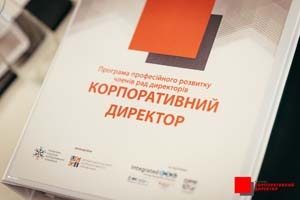 On September 15-17, the first module of the Professional Development Program for Board Members “Corporate Director” was held. The partners in the implementation of this program were the Ukrainian Corporate Governance Institute, the Center for International Private Enterprise (CIPE), the IFC’s Integrated Environmental, Social and Governance (ESG) Standards Program in Europe and Central Asia, implementing with the financial support of the Government of Switzerland (SECO), as well as the European Bank for Reconstruction and Development, which in cooperation with partners provided scholarship support to some of the program participants.
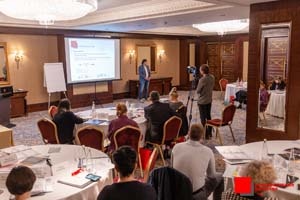 More than 80 representatives of the business environment of Ukraine and Central Asian countries (Kazakhstan, Uzbekistan, Tajikistan, and Kyrgyzstan) participate in the program. Among the participants, there are women leaders of Ukrainian businesses who have joined the program thanks to the support of the EBRD and financing from the Government of Sweden under the EBRD Small Business Fund (other donors: Italy, Korea, Luxembourg, Norway, Switzerland, Japan, and TaiwanBusiness – EBRD Technical Cooperation Fund, and the USA).
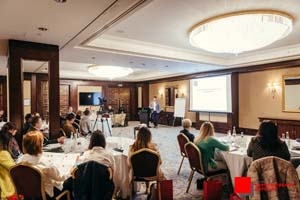 Olena Voloshyna, IFC Country Manager for Ukraine, and Lesia Kuzmenko, Associate Director, Deputy Head of the EBRD in Ukraine, welcomed the program participants.
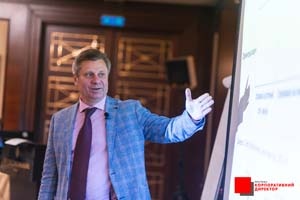 Among the program speakers in the first module, the participants had the opportunity to hear Oleksandr Okuniev, Chairman of the CGPA Management Board. He is the author and ideological inspirer of the program. He focused the participants’ attention on the main advantages of quality corporate governance, spoke about “world standards” and “best practices” of corporate governance, and separately defined the role and competencies of the board, as well as the composition of the board and succession planning. O. Okuniev concluded his speech with a brief introduction to evaluating the Board’s performance.
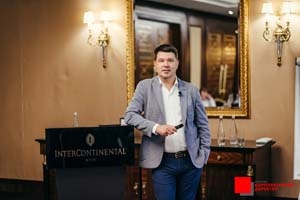 Oleg Zhuravlov, Advisor to the Minister of Infrastructure of Ukraine, former Deputy Chairman of the Supervisory Board of ” Ukrainian Railways”, and Chairman of the Supervisory Board of PJSC IC “Krona”, shared with the participants the best practices for the effective organization of the Board’s work. In particular, Oleg considered such issues as the procedure of Induction Session for the Board members, planning of the Board meetings, the Board Committees (Audit, Remuneration, Nomination, Strategy), the role of the Chairman of the Board, as well as the role and competence of the Corporate Secretary in the work of the Board and the company.
Timur Bairov, Head of the Kazakhstan division of Bitfury Group, member of the Board of Directors of JSC “Center for International Programs”, focused the participants’ attention on the company’s strategy and the role of the Board in its development, implementation, and monitoring. The presentation featured examples of successful and unsuccessful strategies.
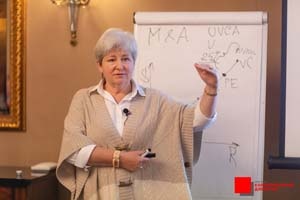 Iryna Starodubova, the Associate Partner at Capital Times, started the third day by considering possible business financing strategies. I. Starodubova spoke about the capital structure of the company and the cost of raising capital in practice, debt financing, and raising money from private equity funds: terms of the transaction, valuation, and experience.
 Sergiy Goncharevych, founder and managing partner of Capital Times, shared his experience of Ukrainian companies’ IPO, spoke about the advantages and disadvantages of publicity, noted the stages of the company’s preparation for the initial public offering: market selection, sequence of actions, costs, typical mistakes.
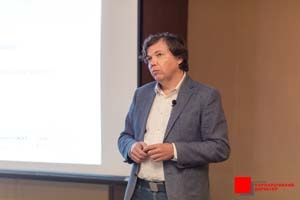 Oleksandr Pochkun, co-founder and managing partner of Baker Tilly in Ukraine, in his speech, together with the participants, found answers to the following questions: what information should be provided by the top management to the Board, what useful information can be obtained from the financial statements, how to identify potential problems and risks, what indicators should be used to evaluate the performance of the company’s management. O.Pochkun shared his own experience of participation on the Supervisory Boards of Ukrainian companies and gave valuable recommendations to current and future Board members.