



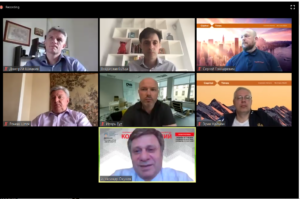
 This time, the speakers focused on the impact of the crisis on the company’s strategy and the tasks of the Board in such situations. The conference was attended by more than 200 participants from eight countries, namely: the United States, the Netherlands, Armenia, Azerbaijan, Georgia, Belarus, Kazakhstan, and the United Kingdom.
Some tips and conclusions from the speakers of the event.
Vladislav Burda, Founder and President of RedHead Family Corporation, Chairman of the Board of Directors of MULTIPLEX, Founder and President of the Association of Owners of Family Companies FBN-Ukraine.
 The Board is a structure that, under normal circumstances, should essentially formalize the business, make it move in the right direction, and, if possible, faster. But during the crisis, the Board is in the same boat with the CEO and the owner, all have the same equal opportunities, and therefore the board members, first of all, must change the rhythm of meetings. In those companies that have been particularly hard hit by the crisis, we now use 2-hour updates every two weeks, where we clearly understand what is happening to the company and what the CEO thinks about it. It is essential for board members not to be shy and say that they agree to cut their compensation. Because if board members do not become leaders in cost-cutting and do not start with themselves, it will be challenging for the whole company to cut its costs. In companies where the situation is terrible, you can reduce the compensation of board members to zero.
“Start with yourself, modify yourself, make frequent meetings, do not hesitate to be in the same boat; you are no longer on top, you are not such a very formal supervisory board, and you are the same creative body as the rest company management team; because the company needs to invent something new, even a new business.”
Dmytro Shymkiv, Chairman of the Board of Darnitsa Group:
 At the beginning of the quarantine, the Board and the company’s management identified three factors: the company’s operations, the safety and protection of employees, and the performance development. The main task of the cooperation and communication with management was to jointly decide how to set up and organize all the abovementioned activities. The Board acts as a partner here, we have moved on to systematic work – conducting a weekly analysis of the crisis in four indicators: business, people, assets, communications. Constant communication between the Board, the owner, and the management has formed a common understanding that the crisis is an opportunity to develop new business areas. The windows of opportunity in a crisis will continuously open and close, and at a breakneck pace, so decisions must be made quickly. There is no time to wait and think long.
Roman Shpek, Chairman of the Board of the Independent Banking Association of Ukraine, Chairman of the Supervisory Board of Alfa Bank JSC
 Due to the difficult, sometimes painful, and costly banking sector reforms, which have been carried out since 2014, the banking system in working order is going through the crisis. Banks have a sufficient level of capital, an adequate level of liquidity, and the changes that have taken place have led to a change in the corporate structure of most banks, the start of supervisory boards, and a change in the culture of risk management. Many of these processes, which were perceived as painful, have led to the fact that banks are going through this crisis normally, they are helping to resolve the issues of their borrowers, depositors, customers. And in previous crises, the country and the government saved the banking system.
The main priorities of Alfa-Bank during the quarantine were:
- Preservation of the bank’s financial stability in the medium term.
- Preservation of human capital. 35% of the bank’s employees must be at work to ensure all the bank’s processes. They are allowed to work in safe conditions and are provided with all means of protection; staff rotation is provided if necessary. More than 2,000 employees were promptly transferred to remote work.
- Adoption of conclusions on the crisis situation and the parameters of further work, taking into account the experience gained.
 Erik Nayman, the Managing Partner of the Capital Times Investment Advisory, shared his somewhat optimistic macroeconomic forecasts for Ukraine: “We will not live and work as before. The economy is moving to work at low speeds. Consumption and production will decrease by an average of 10-20%. We used to live in an economy of prosperity when everything is there, and now it’s over. According to our estimates, the dollar GDP will decrease by $ 20 billion to the level of 2018, and the nominal hryvnia GDP in hryvnias will fall, for the first time in the history of Ukraine. This fact will harm state budget revenues, contributing to the widening of the budget deficit. The hryvnia exchange rate will go to 29-29.5 UAH / USD, not higher, this will allow developing import substitution and export. Foreign exchange reserves will be reduced, but not critically, and inflation will be up to 10%, which is also not a problem. “
 Sergey Goncharevich, Founder and Managing Partner of the Capital Times, an independent director of the supervisory Board of companies with a share of the state in the statutory funds of the State Property Committee of the Republic of Belarus, Tutor the Corporate Director Program; member of the National Registry of Corporate Directors, told about the sources of funding for companies in the difficult time. According to the expert, today only international financial institutions, direct investment funds and strategists remain available. If you have the money and have the opportunity to buy now, then the best time for buying will not be the next 5-7 years. You need to buy competitors, some related companies, which ultimately increase the margin for business – and this is one of the strategic options for boards of directors, supervisory boards. Now the buyer’s market has arrived, and companies need to prepare to accept and receive money – this is a rather long and complicated project. The task of the Board was to maintain the company’s readiness to accept money all the time.
 Igor Gut, Founder of DYB | Develop Your Business Ігор Гут, співзасновник DYB | Develop Your Business, member of the Board of the International Renaissance Foundation, founded by George Soros; Tutor of the Corporate Director Program; member of the National Registry of Corporate Directors:
At Erickson’s headquarters in Stockholm three years ago, I heard the idea that humanity had accumulated a considerable amount of technology, but used only a small percentage. The pandemic has become a catalyst, an accelerator of the use of technology. Therefore, all our usability will begin to be applied in business soon. First of all, in B2B markets, strengthening internal processability.
But what to bet on – internal/external processability- depends on each company and its customer relations. The main thing is to calculate the level of adaptation and investment in technology because the risks are high. This is where the role of the Board is critical. Its task is to determine where the company is, to assess the long-term potential of new opportunities, whether our market will really change significantly?
The Board should help answer whether it is necessary to change the business model and whether it is worth investing in change. Today, the Board is a compensator for strategic planning. Management is stressed; it is drowning in operational matters, saving the company. But we must also think about the future. At the very least, the decisions made today should not be emotional, driven only by fear, but correlated with the strategic vector of development. That’s why the Board today helps balance urgent operational issues and the company’s future.
 Advice to managers and members of Boards of Directors: think about yourself. Few people think about themselves. Your energy is the energy of the company, its chances for the future. It is essential to understand what supports you, keeps you in shape. You have no right to sour. Now is an excellent time to improve contact between the Board and management.
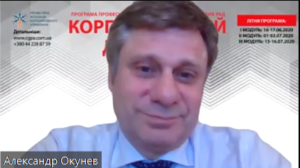
Summing up the event, the moderator of the discussion Oleksandr Okuniev, Chairman of the CGPA Management Board, noted that CGPA would continue the practice of online discussions of important topics of corporate governance.