



The Corporate Governance Professional Association and the Ukrainian Corporate Governance Institute held the next ‘Corporate Director’ Professional Development Program for board members – one of the key training programs in Ukraine for those who are already members of a board of directors or supervisory board, or who are preparing for such a role.
The training took place in two modules: 21–23 May and 11–13 June 2026 in Kyiv. The InterContinental Hotel once again served as the venue. Over the course of six intensive days of training, participants worked with leading Ukrainian and international experts, analysed real-life case studies, discussed the challenges faced by boards in business, banking and state-owned companies, and learnt how to apply corporate governance tools in practice.
The ‘Corporate Director’ program is designed for business owners, members of supervisory and advisory boards, senior managers, corporate secretaries, representatives of the state as an owner, heads of legal, financial, compliance, risk and audit functions, as well as professionals seeking to develop their careers in the field of corporate governance.
The program’s main objective is to provide participants not only with a systematic understanding of the board’s role, but also with practical tools for addressing the key issues facing companies today: strategy, board effectiveness, interaction with management, audit, risks, compliance, remuneration, succession planning, corporate culture, inclusive leadership, financing, innovation and the use of artificial intelligence.
This time, over 60 participants joined the program – representatives from the public sector, supervisory boards of state-owned companies, government bodies, banks and financial institutions, the private sector, and the legal, audit, consultancy and investment sectors. Participants included business owners and co-owners, CEOs, CFOs, members of supervisory boards, company secretaries, compliance managers, and directors of risk management, corporate affairs, development and finance. This mix of participants is one of the program’s key strengths. ‘Corporate Director’ is not merely a training program, but also a forum for professional exchange among individuals who make strategic decisions, are responsible for corporate development, management transformation and the implementation of best practices in corporate governance.
Participants included representatives from the Ministry of Economy, Environment and Agriculture of Ukraine, the Ministry of Energy of Ukraine, the Secretariat of the Cabinet of Ministers of Ukraine, the State Enterprise ‘Defence Procurement Agency’ under the Ministry of Defence of Ukraine, the EU Anti-Corruption Initiative, as well as members of supervisory boards and heads of state-owned companies, including PJSC ‘Ukrhydroenergo’, JSC ‘Ukrposhta’, JSC ‘Ukrainian Distribution Networks’, JSC ‘Ukrenergomashiny’, PJSC ‘Ukrainian Danube Shipping Company’, JSC ‘Kharkivoblenergo’ and other companies. The private and financial sectors were represented by participants from Winner Leasing LLC, ASVIO BANK JSC, UKRGASBANK JSC, NOVAPAY LLC, OKSI BANK JSC, Sens Bank JSC, Nova Poshta LLC, AVRORA MULTIMARKET, Boyden, MacPaw, Baker Tilly Ukraine, Eterna Law, KLR HOLDING LLC, LIKA COMFORT LLC, Beikush Vaineri, Gloucester Energy, Promimpex, Alterra Group, TwinS Style and other Ukrainian companies.
The program was opened by Olena Voloshyna, Head of the International Finance Corporation (IFC) Representative Office in Ukraine. The program’s format combined lectures, practical exercises, open discussions, a business simulation, specialised sector-specific tracks and a lively exchange of experiences amongst participants.
The first module provided participants with a basic yet in-depth framework for understanding the modern board of directors. Oleksandr Okuniev, Chair of the CGPA Board of Directors, outlined the key elements of corporate governance, the role and remit of the board, approaches to its composition, succession planning, the organisation of an effective board, and the roles of committees, the chair of the board and the company secretary. These topics form the foundation for anyone who wishes not merely to be a nominal board member, but to genuinely create value for the company. A separate strategic session was led by Taras Kyrychenko, a board member of a non-state pension fund, chair of the supervisory board of Nova Poshta LLC, and co-founder of the Toloka.vc investment syndicate. Participants explored what the board’s role should be in developing and implementing strategy, how the board can influence the company’s long-term development, and how to translate strategic discussions into concrete management decisions.
Oleksandr Pochkun, co-founder and managing partner of Baker Tilly in Ukraine, led a masterclass in the form of an open discussion on how a board of directors can move from strategy to results. The focus was on operational efficiency, planning, budgeting, performance monitoring, linking senior management remuneration to the company’s performance, and high-quality reporting to investors. Audit and control were key topics on the program. Dmytro Kaptsan, Audit Director at EY Ukraine, spoke about effective interaction between the supervisory board and the external auditor, expectations of the audit committee, and best practices for its work. Dmytro Sergiyenko, Director of the Internal Audit Department at PJSC ‘Ukrnafta’ and a member of the Audit, Risk and Ethics Committee of the Ukrainian Red Cross Society, outlined the role of internal audit within the corporate governance framework, the standards governing its work, and the expectations of the board and management.
A separate practical session was devoted to succession planning and the search for a CEO – topics that directly impact a company’s sustainability. Oleksandr Okuniev spoke about succession planning as one of the board’s key tasks and the work of the Nomination Committee. Oleksii Dolgikh, Managing Partner of the Ukrainian office of Boyden Global Executive Search, member of the Board of Directors of the CGPA, examined practical issues relating to the search for a CEO, selection criteria, executive remuneration and common pitfalls in the recruitment of top management. Oleksandr Onufrienko, solicitor, PhD in Law, specialist in corporate law, led a business simulation on the board’s decision-making regarding business management issues, in particular concerning the CEO’s contract and their accountability to the company. This format gave participants the opportunity to see how complex management issues play out in the day-to-day work of the board. Serhii Pogrebnoi, co-owner of SK Security, partner at Sayenko Kharenko, Chairman of the Board of the Association of Ukrainian Security Companies (APKBU), and Vice-President of ASIS UKRAINE, explored the topic of corporate security as a key focus for the board in the context of high uncertainty, military risks and new challenges facing Ukrainian companies.
The second module began with topics that are increasingly shaping the quality of work carried out by modern boards: corporate culture, leadership and the effectiveness of the chairperson. Peter Zashev, Professor of Practice at the Stockholm School of Economics in Riga and Director of Corporate Training Programs at the Hanken School of Economics, spoke about the board as the bearer of corporate culture, the practical significance of culture for a company’s business success, the role of leadership and the battle for talent. Nina Dombrovska, a board member of private companies and civil society organisations, and co-founder and co-president of Women on Boards Ukraine, led a session on inclusive leadership, diversity on boards and the impact of women’s participation in governance. The topic of diversity was considered not as a formal requirement, but as a factor in the quality of discussions, decision-making and the strategic resilience of companies. Oleg Drin, independent director and chairman of the supervisory boards of Aurora and Comfy, and independent director on the supervisory board of the Suzirya Group of Companies / Master Zoo, and co-owner and non-executive director on the supervisory board of the agricultural company Central Plains Group,, shared his practical experience as a board chair in shaping the board’s effectiveness – from setting the agenda to crisis management, the dynamics of discussions and the board’s strategic influence.
One of the program’s key features was the inclusion of specialised tracks for representatives of the public sector, banks and financial institutions, and the private sector. This enabled participants to focus specifically on the issues most relevant to their organisations and professional roles.
For representatives of the public sector, Serhiy Derkach, Deputy Minister of Community and Territorial Development of Ukraine, and a member of the supervisory board of JSC ‘Ukrposhta’ for the period 2023–2025, led a session on anti-corruption compliance in the work of supervisory boards of state-owned companies. Volodymyr Igonin, partner and head of the corporate/M&A practice at Vasil Kisil & Partners Law Firm, and a member of the Board of Directors of the CGPA, spoke about the state ownership policy and the legal aspects of letters of expectations. Oleksii Yegorchenkov, Senior Manager, Public and Government Sector Consulting at EY in Ukraine, presented on letters of expectation and remuneration policies for executives and board members. Serhii Konovets, an independent member of the supervisory boards of JSC ‘Ukrainian Defence Industry’ and LLC ‘Gas Transmission System Operator of Ukraine’, spoke about the specific features of the audit committee’s activities within the board of a state-owned company. Olena Potopalska, managing partner at AC Crowe Ukraine, led a session on evaluating the performance of supervisory boards of state-owned companies.
For representatives of banks and financial institutions, Serhiy Savchuk, Director of the Department of Methodology for the Regulation of Non-Bank Financial Institutions at the NBU, spoke about the regulation and supervision of financial institutions. Yaroslav Omelchuk, Director of Compliance Control and Financial Monitoring, Member of the Management Board of TASCOMBANK, spoke about compliance in banks and the key issues to which members of supervisory boards should pay attention. Vitaliy Lishchuk, Chief Financial Officer of the State Enterprise ‘National Information Systems’, Head of a department at the NBU from 2015 to 2019, examined the practice of engaging with the regulator and corporate governance requirements in banks. Yuriy Blashchuk, an independent member of the supervisory board of JSC ‘Ukrgasbank’, spoke about the role of supervisory board committees in financial and banking institutions. Olyana Gordiyenko, Director of Corporate Governance at the ICU Group and Chair of the Supervisory Board of JSC “Ukreximbank” from 2019 to 2023, spoke about the interaction between the executive body and the sole shareholder, the board and the departments reporting to it.
For representatives of the private sector, Volodymyr Igonin discussed the regulation of relations between shareholders and business partners through corporate agreements, and the role of the board in this process. Serhiy Bulavin, a member of supervisory and advisory boards of Ukrainian companies and a member of the Board of Directors of the CGPA, and Dmytro Kozlov, chairman and member of supervisory and advisory boards, led a practical session entitled ‘Boards in Business: A User’s Guide’, focusing on the establishment and operation of boards in small and medium-sized enterprises, the role of the board in business organisation, strategy, and the transition from an advisory board to a supervisory board. Iryna Starodubova, an independent member of the Board of Directors at Comfy and other Ukrainian companies, spoke about business financing strategies, capital structure, debt financing, attracting private equity funds, and the role of the board in attracting investment.
Participants also learnt about practical tools for business support and financing: leasing as a tool for additional financing from Anton Kaminsky, Director of Winner Leasing; support tools for small and medium-sized enterprises from Alina Movchan, Project Coordinator at the EBRD’s SME Support Department in Ukraine; opportunities for Ukrainian businesses to secure funding from Oksana Strashna, Director of the SME Direct Investment Programme at the Ukraine-Moldova American Enterprise Fund.
The final day of the program was devoted to topics that are now indispensable to the modern work of a board: innovation, artificial intelligence and remuneration. Nadiya Vasylieva, a member of the Board of JSC ‘Prozorro.Sales’ for the period 2019–2025, a member of the Supervisory Board of JSC ‘Credit Agricole Bank’, Chair of the Finance Committee of the Management Board of the International Charitable Organisation ‘Eastern Europe Foundation’, spoke about the role of the board in developing and implementing an innovation and investment strategy, and about ways in which boards can apply artificial intelligence in their own activities.
Oleksandr Okuniev led a session on remuneration within the corporate governance framework, specifically covering approaches to board member remuneration, its structure, practices, fixed and variable components, payment procedures and the work of the board’s remuneration committee. Guest speaker Natalia Shevchenko, head of the Banking & Finance and Corporate Governance legal practice and a senior lawyer at Ernst & Young Ukraine, shared her practical experience of developing remuneration policies for members of the executive body and key management personnel, taking into account approaches to risk minimisation.
Participants in the program included members of supervisory boards of state-owned companies, as well as representatives of government bodies responsible for managing these companies. The Ministry of Economy of Ukraine, in partnership with the CGPA and the European Bank for Reconstruction and Development (EBRD), is implementing a project to strengthen the capacity of supervisory boards of state-owned companies and bodies exercising the functions of the owner of state property. The initiative forms part of the implementation of corporate governance reform in Ukraine. This is yet another step towards improving the quality of corporate governance in Ukraine. This program is not just about knowledge. It is about accountability, transparency and trust in the management of state assets. The project is being implemented with the support of the Multi-Donor Account for Stabilisation and Sustainable Development in Ukraine (MDA), which is administered by the EBRD. The MDR’s donor countries are Austria, Denmark, Finland, France, Germany, Italy, Japan, the Netherlands, Norway, Poland, Sweden, Switzerland, the United Kingdom, the United States and the European Union – the largest donor.
Also taking part were scholarship holders who had studied with the support of the EBRD as part of the ‘Women in Business’ program, funded by the European Union. This support helps to involve women in management structures and creates equal opportunities for career development in corporate governance. The EBRD recognises the importance of improving corporate governance to strengthen Ukrainian business and supports female leaders of Ukrainian SMEs with scholarships to enhance their professional qualifications, helping them to acquire the skills essential for the growth and sustainability of their companies.
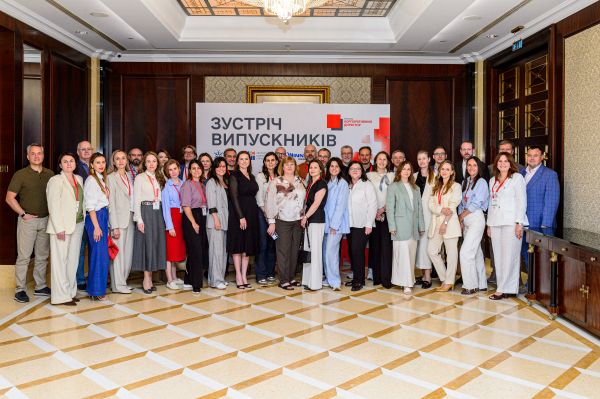
The program concluded with the presentation of certificates to participants and a meeting of graduates of the ‘Corporate Director’ program. This served not only as the final event of the training but also as a continuation of the professional community forming around the program: a community of people who understand the value of high-quality boards, responsible governance, professional ethics and trust.
‘Corporate Director’ is a program for those who want to be prepared for the realities of board work: asking the right questions, seeing the strategic picture, understanding their responsibilities, managing risks, supporting management whilst ensuring proper oversight. It is precisely this kind of professional board that Ukrainian business, state-owned companies and the country’s economy need today.