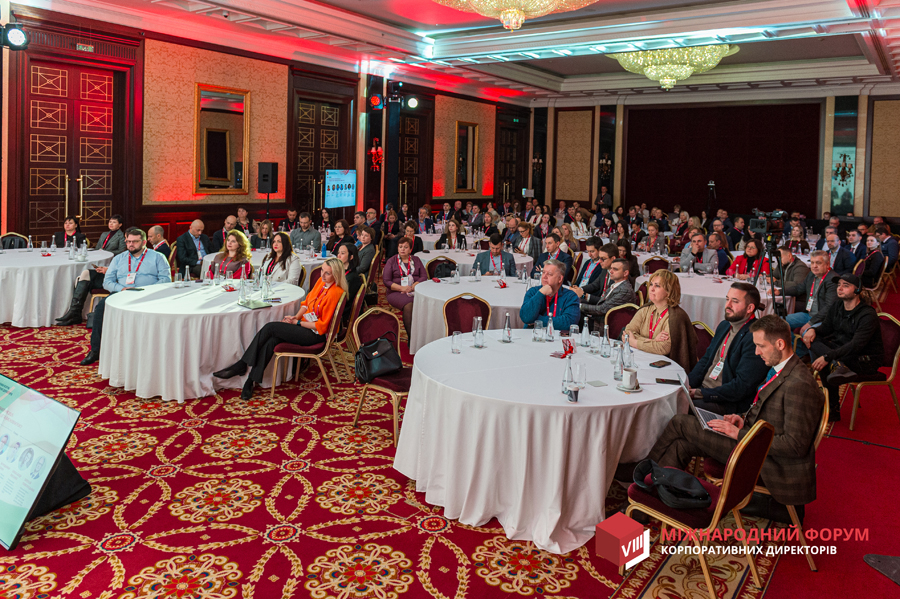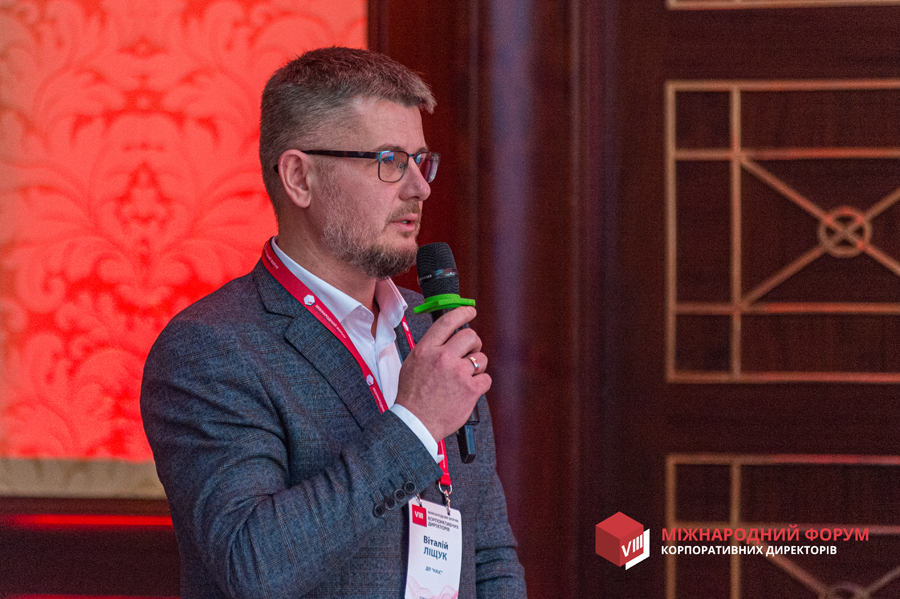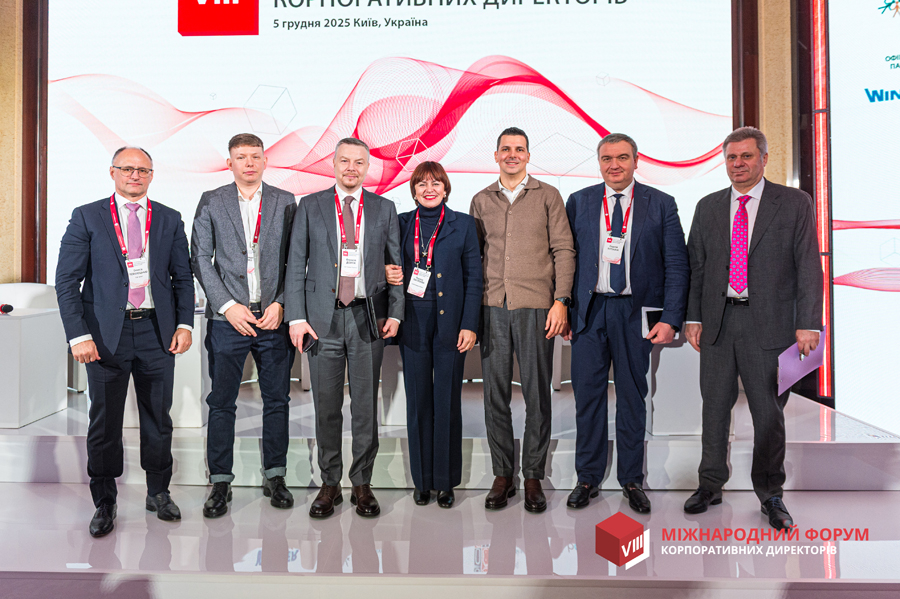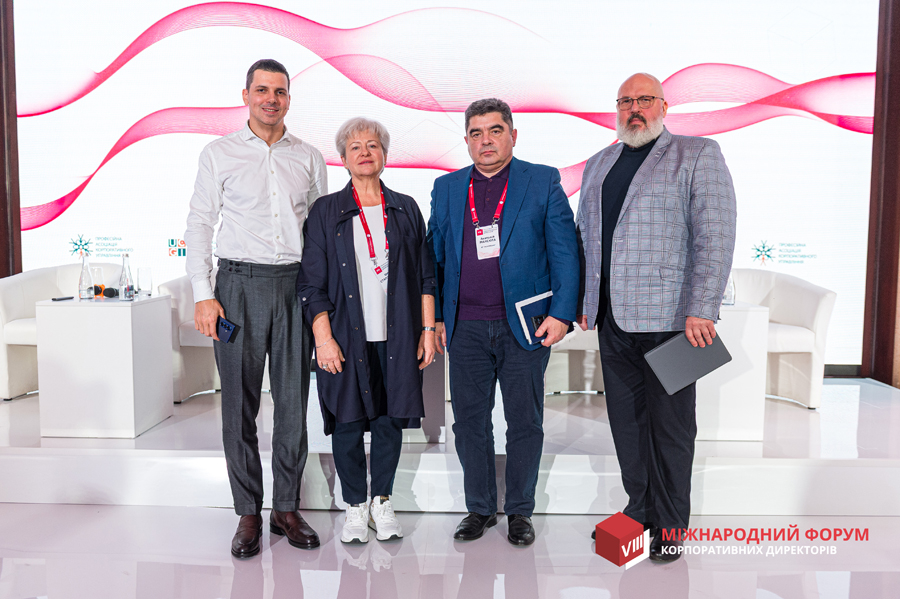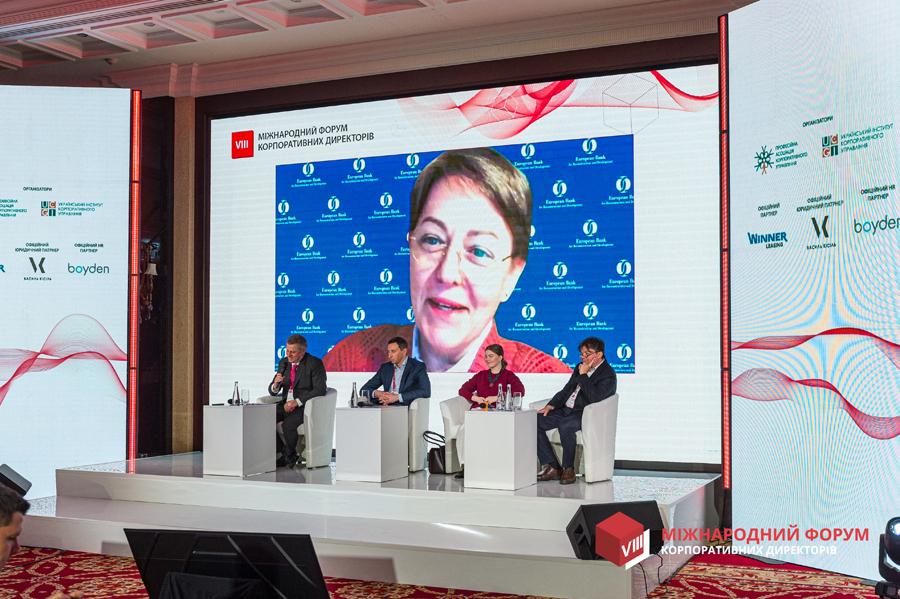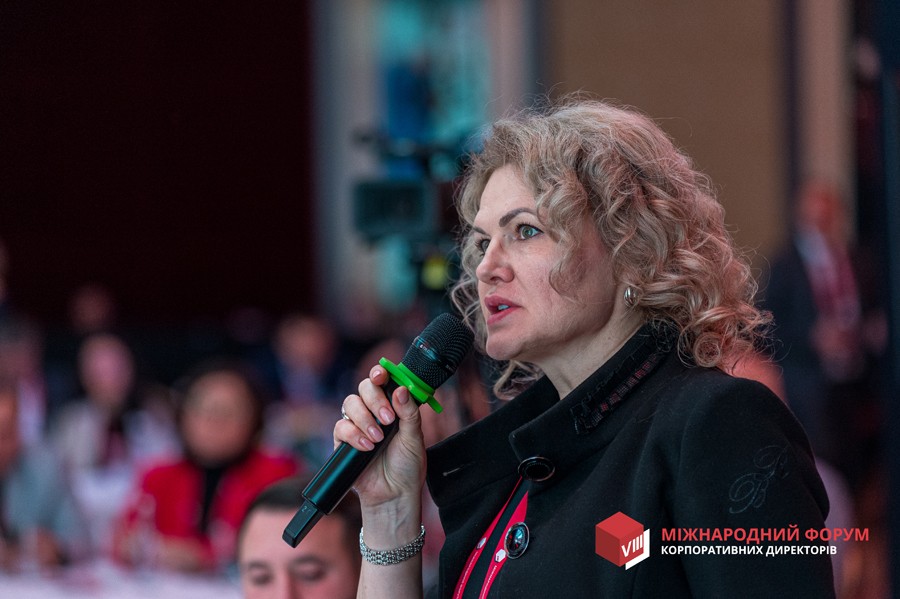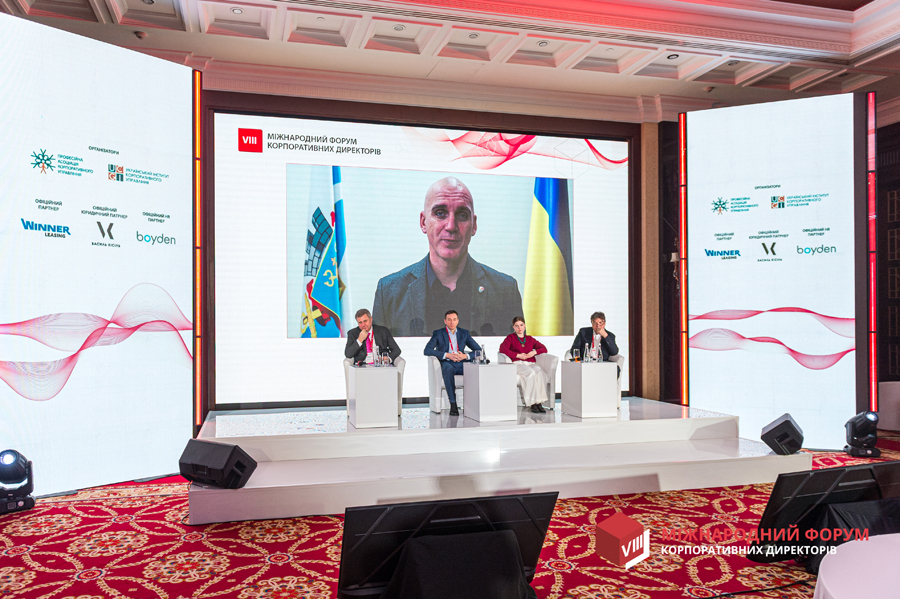
The VIII International Corporate Directors Forum, organized by the Corporate Governance Professional Association (CGPA) and the Ukrainian Corporate Governance Institute, brought together about 200 participants in Kyiv. Participants included members of supervisory and management boards, CEOs and business owners, representatives of state and municipal companies, investors, and consultants—all those concerned with issues of corporate governance and the role of boards in the Ukrainian context of wartime. The Forum’s partners were Winner Leasing, the law firm Vasil Kisil & Partners, and Boyden Ukraine.
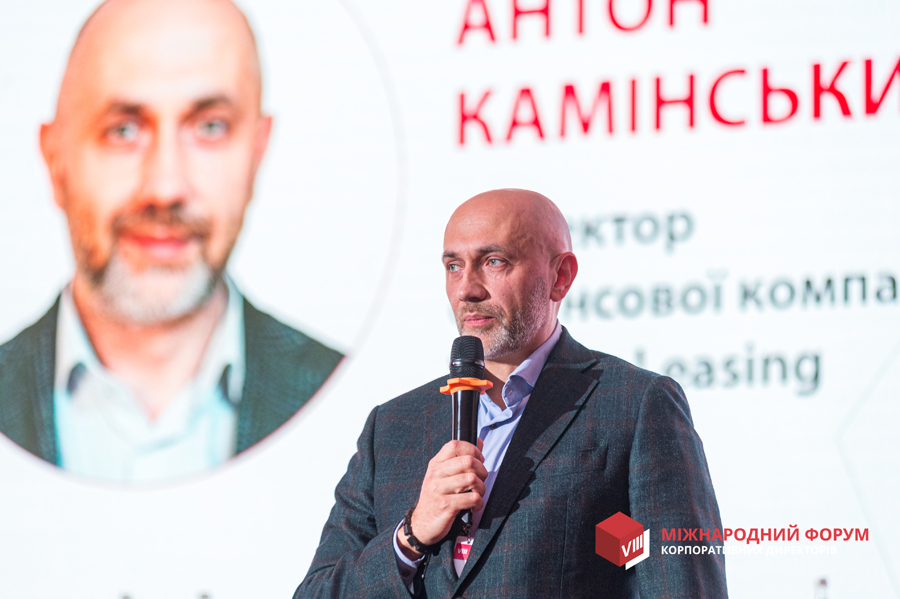
In his welcoming speech, CGPA Board of Directors Chairman Oleksandr Okuniev emphasized the role of CGPA and the Ukrainian Corporate Governance Institute in shaping modern governance standards and noted the support of the CGPA Corporate Directors Solidarity Fund, which provides military personnel with access to training under the Corporate Director program. Anton Kaminsky, Director of Winner Leasing, emphasized the practical value of cooperation with CGPA in improving the quality of management decisions in business.
Public, private, and municipal sectors: common challenges and different speeds
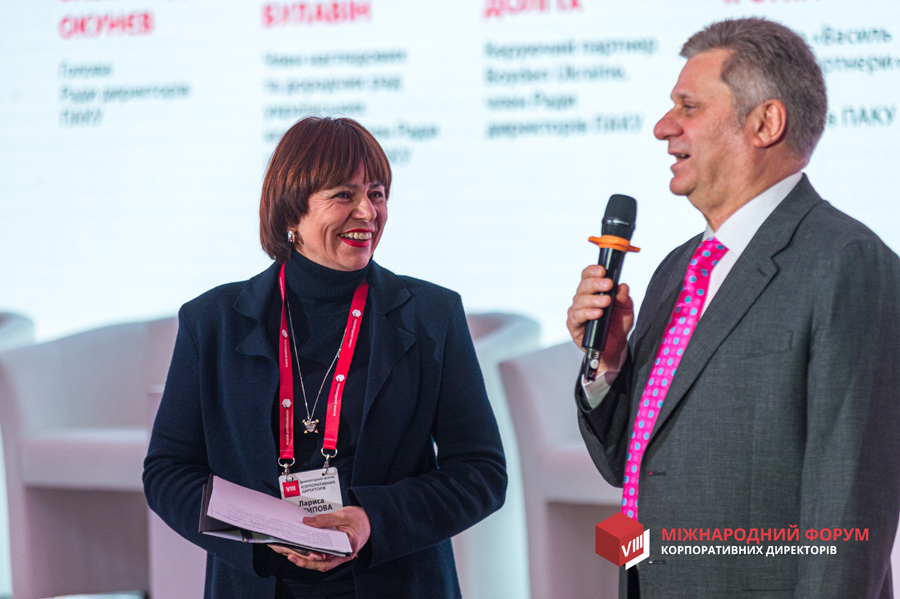
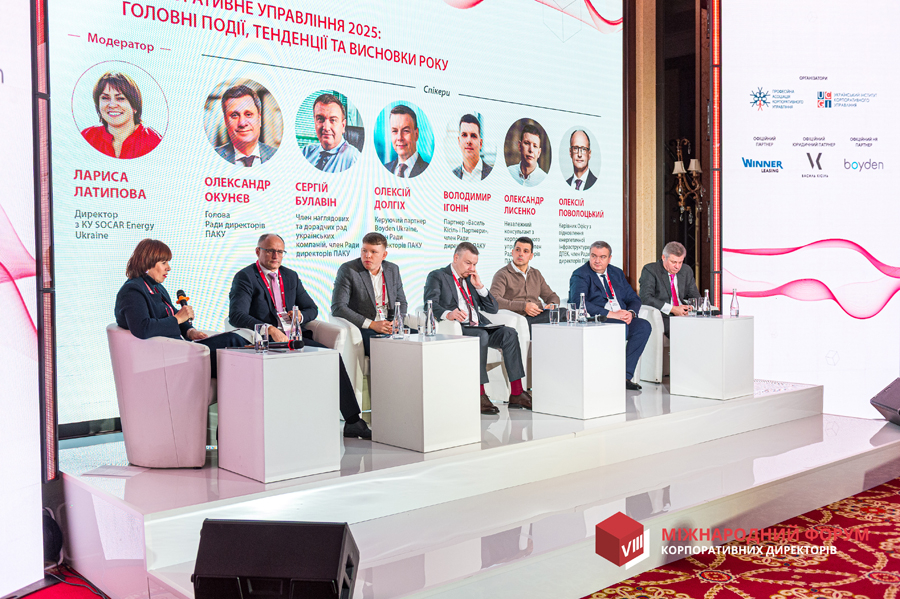
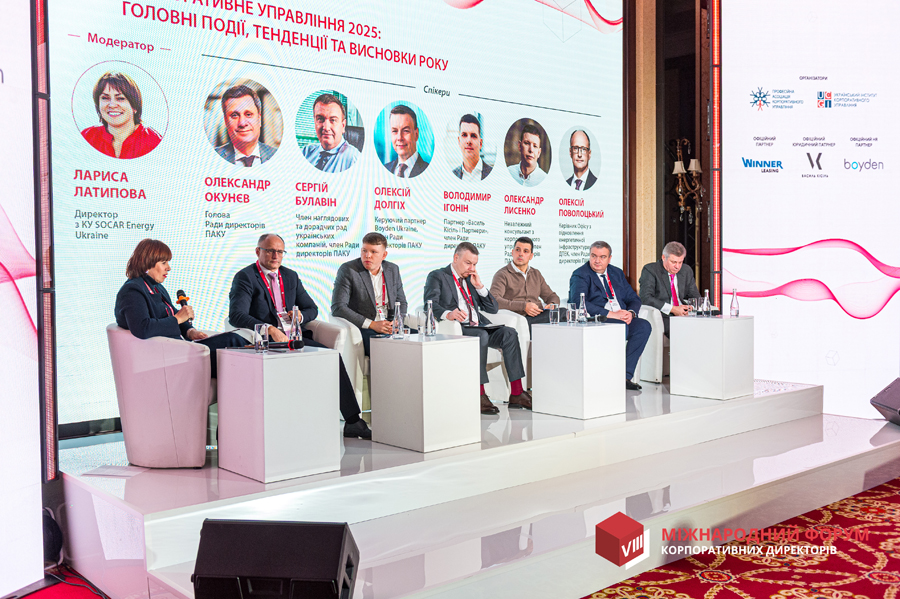
At the first session, “Corporate Governance 2025: Trends, Developments, and Conclusions of the Year,” experts discussed how war is changing the logic of governance. Oleksandr Lysenko, an independent corporate governance consultant, called the situation with the Supervisory Board of Energoatom a serious signal for the entire public sector reform, emphasizing the importance of real compliance with procedures. Volodymyr Igonin, Partner at Vasyl Kisil & Partners and Member of the Board of Directors of the CGPA, focused on the first year of the State Property Policy and stressed that, despite crisis cases, the role of supervisory boards in state-owned companies remains system-forming.
Sergiy Bulavin, a Member of Supervisory and Advisory Boards and the Board of Directors of the CGPA, spoke about global trends – AI, cybersecurity, ESG, and supply chain changes. He noted that approaches to risk management and business continuity are developing particularly rapidly in Ukraine. Oleksiy Povolotskyi, Head of the Office for Energy Infrastructure Restoration at DTEK and member of the CGPA Board of Directors, emphasized that the quality of corporate governance has become a key factor in the trust of international financial institutions in Ukrainian energy companies.
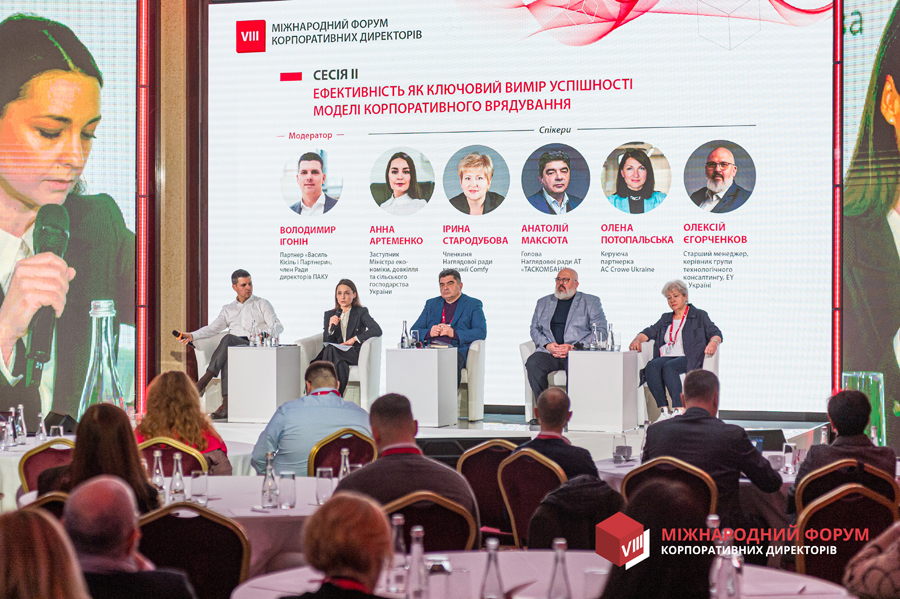
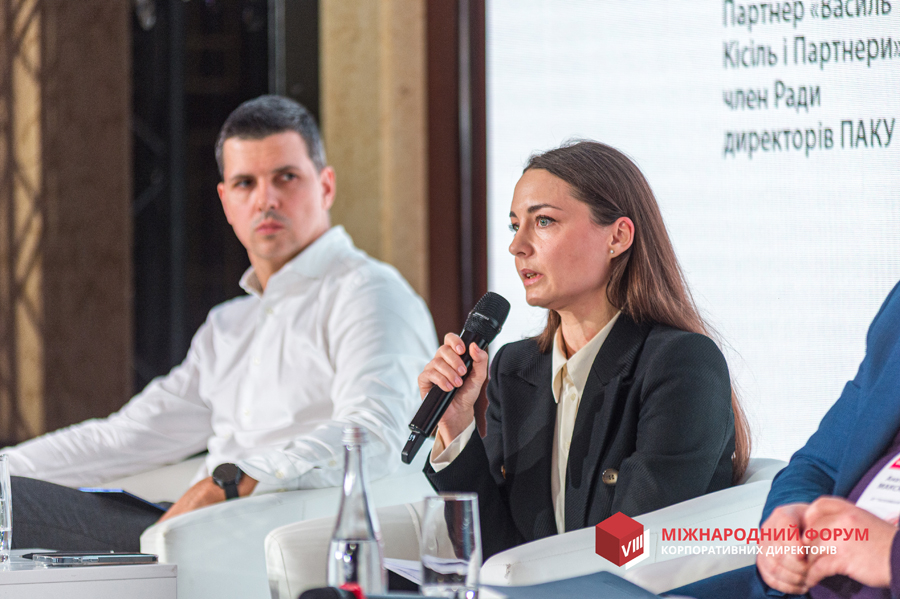
The second session, “Effectiveness as a Measure of Corporate Governance Value,” focused on practical issues. Anna Artemenko, Deputy Minister of Economy, outlined areas for updating policies, competitions, and approaches to evaluating boards in the public sector. Anatoliy Maksyuta, Chairman of the Supervisory Board of TASCOMBANK, shared his experience in building a system of goals and KPIs that are deployed to the level of each member of the board. Iryna Starodubova, member of the Supervisory Board of Comfy, showed how private equity evaluates corporate governance and why a “one man show” is the main limitation for investment. Oleksiy Yegorchenkov, senior manager, public and government sector consulting, EY in Ukraine, emphasized that a culture of regular performance evaluation, rather than formal goal setting, is gradually forming in public and private companies.
Strong boards for business and communities
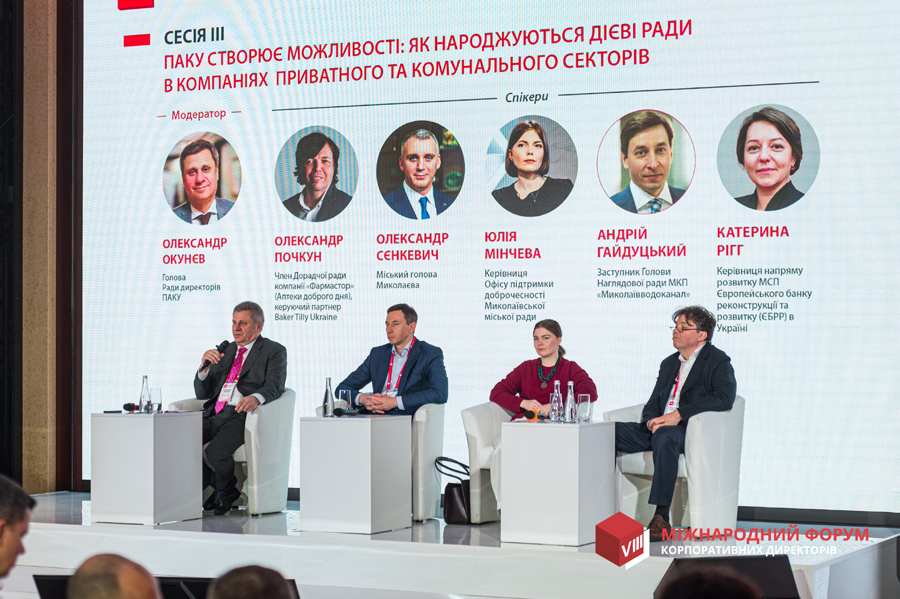
The third session was devoted to practical cases. In the “Board Test Drive” project at Farmastor (Dobryi Den Pharmacies), implemented by the CGPA and Boyden Ukraine, an advisory board was formed through an open competition. Oleksandr Pochkun, its independent member and managing partner of Baker Tilly in Ukraine, noted the owners’ readiness for systemic change as a key condition for success.
In the municipal sector, Mykolaiv served as an example. Mayor Oleksandr Senkevych, Yulia Mincheva, Head of the Integrity Support Office of the Mykolaiv City Council, and Andriy Haidutsky, Deputy Chairman of the Supervisory Board of Municipal Enterprise “Mykolaivvodokanal,” spoke about the formation process, features, and first achievements of the Supervisory Board of the municipal enterprise, created with the participation of the Ukrainian Corporate Governance Institute and the EU Anti-Corruption Initiative. It was emphasized that donors are ready to invest where they see effective corporate governance. Kateryna Rigg, Head of SME Development at the EBRD in Ukraine, presented a new EBRD project on “test drive boards” for small and medium-sized businesses.
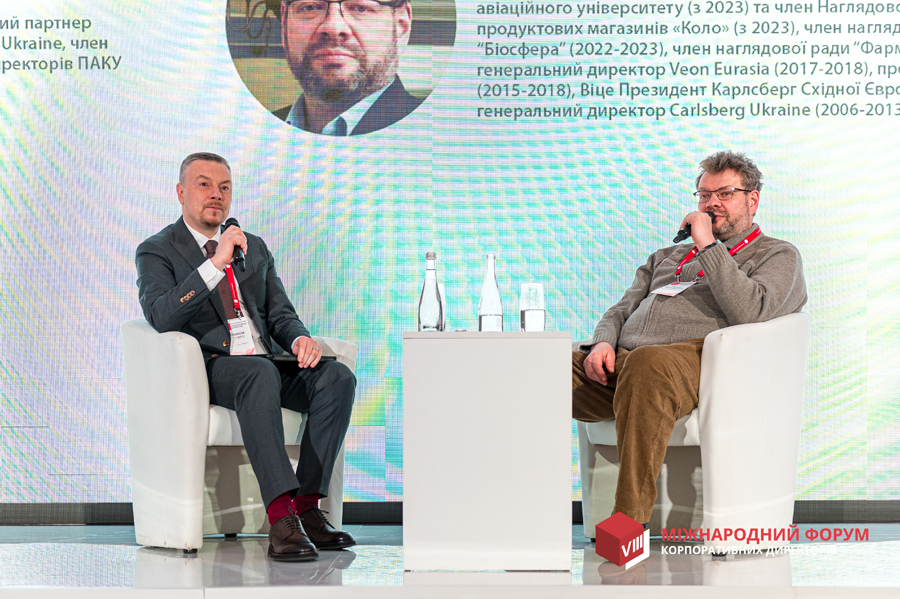
A separate interview session with Petro Chernyshov, an experienced independent director and chairman of a number of supervisory and advisory boards, moderated by Oleksiy Dolgikh, was devoted to the practice of board work, building trust with owners, and the role of strategic oversight. Chernyshov emphasized that strategy should originate in management, while the board should ask the right questions and ensure accountability for its implementation.
Artificial intelligence and boards: a tool, not a replacement
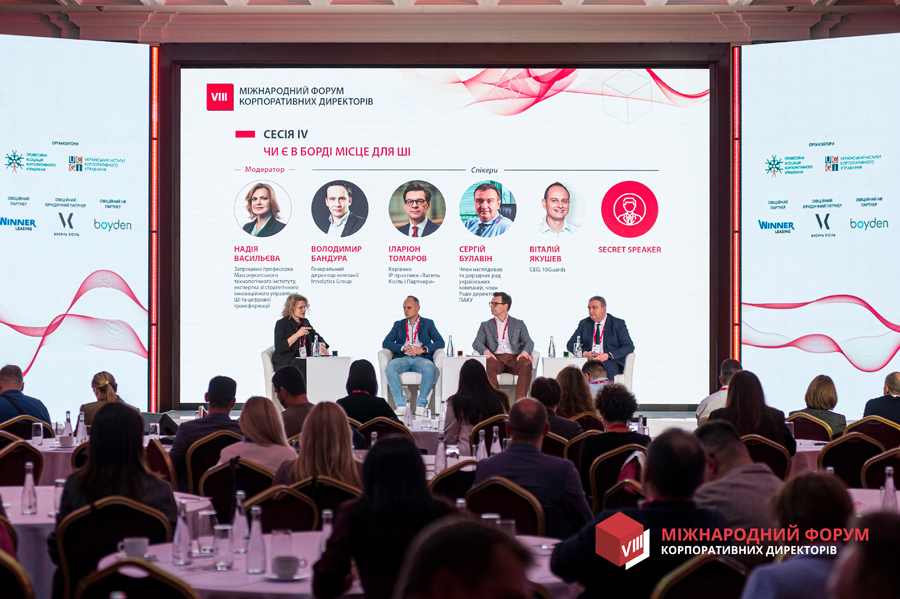
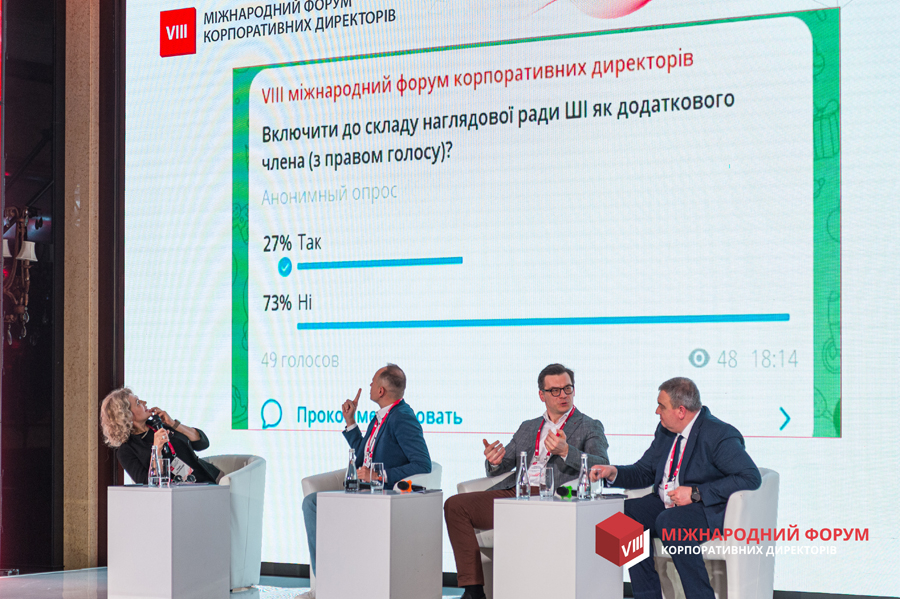
The fourth session, moderated by Nadiya Vasilyeva, Visiting Professor at the Massachusetts Institute of Technology and an expert in strategic innovation management, AI, and digital transformation, focused on the role of artificial intelligence in the work of supervisory boards. The simulated board meeting was attended by Serhii Bulavin, Volodymyr Bandura, CEO of Innolytics Group, Ilarion Tomarov, head of IP practice at Vasyl Kisil & Partners, and Vitalii Yakushev, CEO of 10Guards.
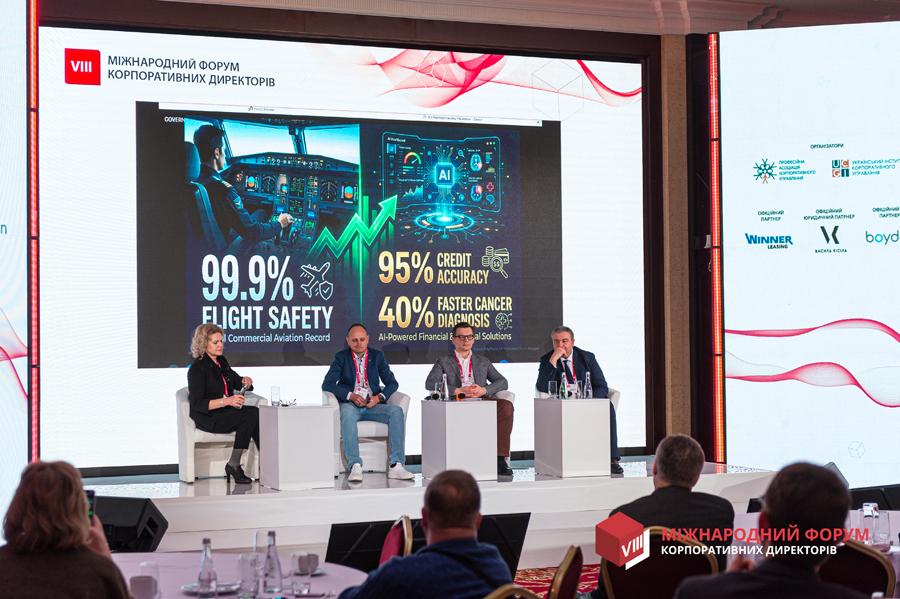
Lawyers and cybersecurity experts clearly stated that AI cannot be a subject of corporate rights and does not bear responsibility, but it can become a powerful tool for analysis, preparation of materials, and decision support. Volodymyr Bandura drew attention to the already available secure scenarios for using local models and special cloud configurations with confidentiality guarantees.
The symbolic conclusion was the connection of a “secret member of the Board” – an AI agent who analyzed the discussion in real time and summarized the results. Both the AI’s conclusion and the speakers’ comments emphasized the main point: technology is developing rapidly, but responsibility for decisions, balance of interests, and ethical frameworks of corporate governance remain in the hands of people.
The VIII International Corporate Directors Forum confirmed that corporate governance in Ukraine is shifting from structure to content. CGPA, the Ukrainian Corporate Governance Institute, and the Forum’s partners will continue to unite the professional community around improving the quality of governance in business, state-owned, and municipal companies.